Cloud Based Retail Management Systems Explained
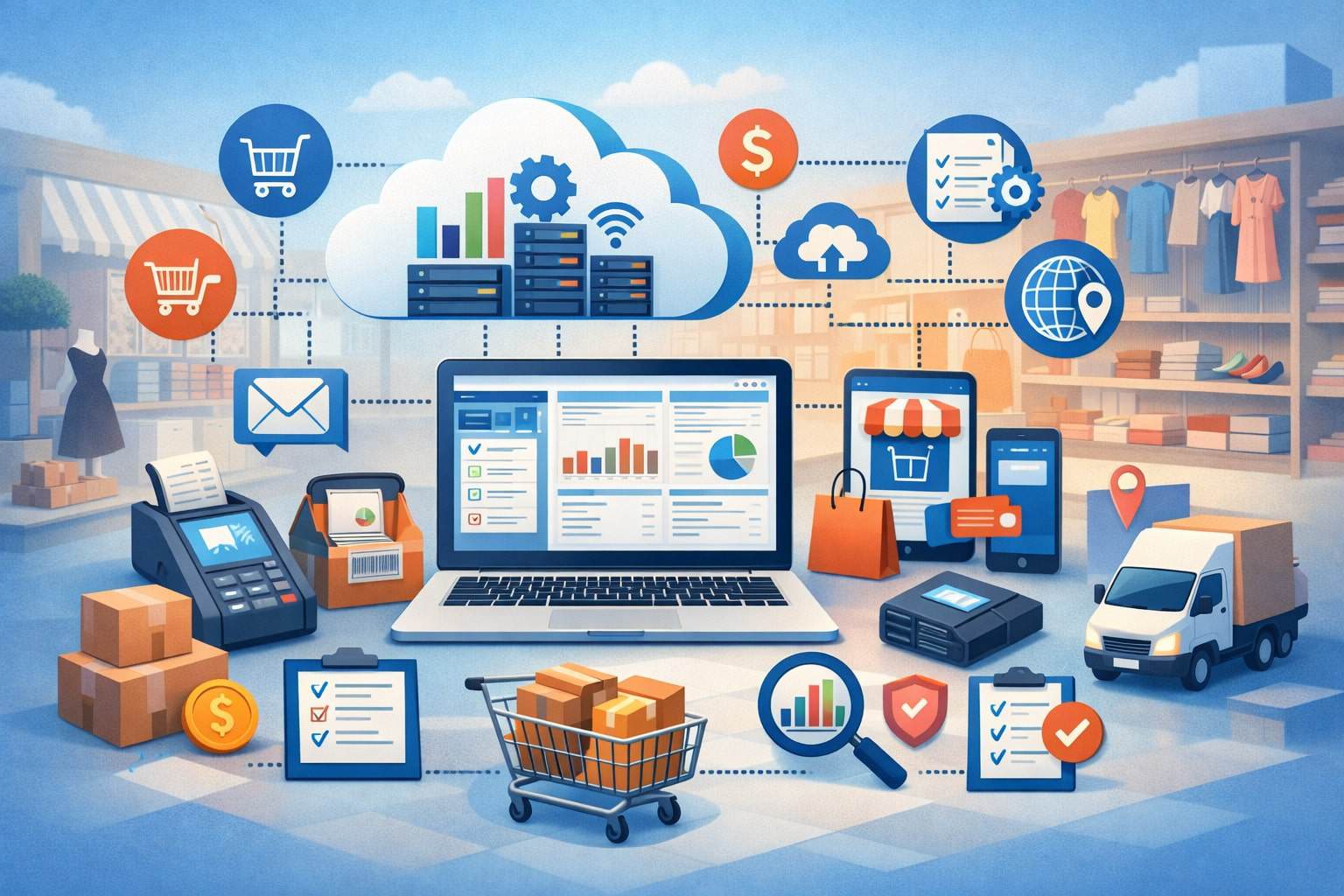
Cloud-based retail management systems have become the operating backbone for modern retail. Instead of installing software on a single store computer and maintaining servers on-site, cloud based retail management systems run online and store data securely in the cloud.
That simple shift changes how fast you can open new locations, launch online sales channels, manage inventory, and make decisions using real-time reporting.
Retail is no longer “a register and a stockroom.” Customers expect buy-online-pickup-in-store, curbside, ship-from-store, mobile checkout, digital receipts, loyalty rewards, and consistent pricing across every channel.
Cloud-based retail management systems unify those workflows so your point of sale, inventory, customer data, purchasing, and analytics all talk to each other. That’s why cloud based retail management systems are now seen less as “software” and more as a platform for running the entire retail business.
Another reason cloud based retail management systems matter is speed. Promotions, price updates, new SKUs, employee permissions, and tax rules can be pushed centrally without touching each device.
With cloud-based retail management systems, owners and managers can monitor sales performance from anywhere, while store teams can focus on customers instead of manual processes.
This guide breaks down how cloud based retail management systems work, what features matter, how to implement them safely, and what future trends are shaping the next generation of retail technology.
You’ll also learn how to evaluate vendors, avoid common pitfalls, and build a setup that scales smoothly as your retail operation grows.
What Are Cloud Based Retail Management Systems?
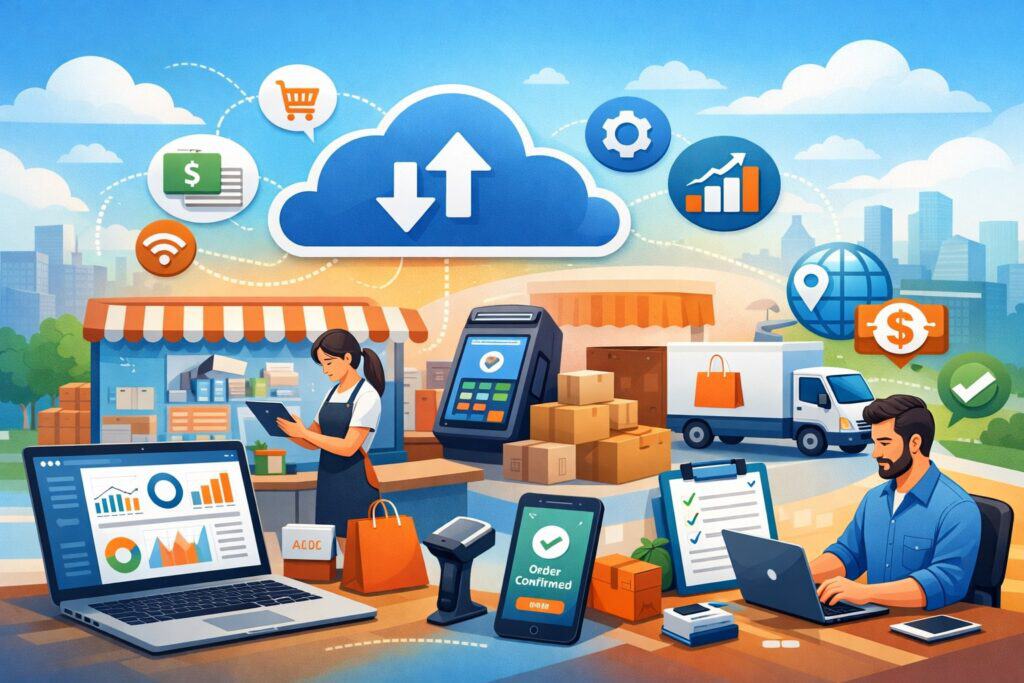
Cloud-based retail management systems are integrated software platforms that help retailers manage daily operations across locations and channels using cloud infrastructure.
In practical terms, cloud based retail management systems combine point-of-sale functions with inventory control, customer management, reporting, employee tools, and integrations—while keeping your data centralized and accessible.
Traditional retail setups often used separate tools for POS, inventory, eCommerce, accounting exports, and customer lists. That created duplicate work and mismatched numbers.
Cloud-based retail management systems replace this fragmented approach with a single source of truth. When a product sells, inventory updates automatically. When a return happens, reporting reflects it instantly. When an employee discounts a sale, the audit trail is recorded in real time.
A major advantage of cloud based retail management systems is that they support “unified commerce.” That means you can sell in-store, online, via social channels, and through marketplaces while managing pricing, stock, and customer profiles consistently.
Even if you use specialized tools for eCommerce or accounting, cloud based retail management systems typically connect through APIs or native integrations so data flows without manual re-entry.
Cloud-based retail management systems also simplify scaling. Opening a new location can be as simple as adding users, devices, and settings. Your catalog, loyalty program, and reporting structure can be cloned and standardized.
This is why cloud based retail management systems are a strong fit not only for multi-store retailers, but also for single-location shops that want a modern, flexible foundation.
How Cloud Based Retail Management Systems Work
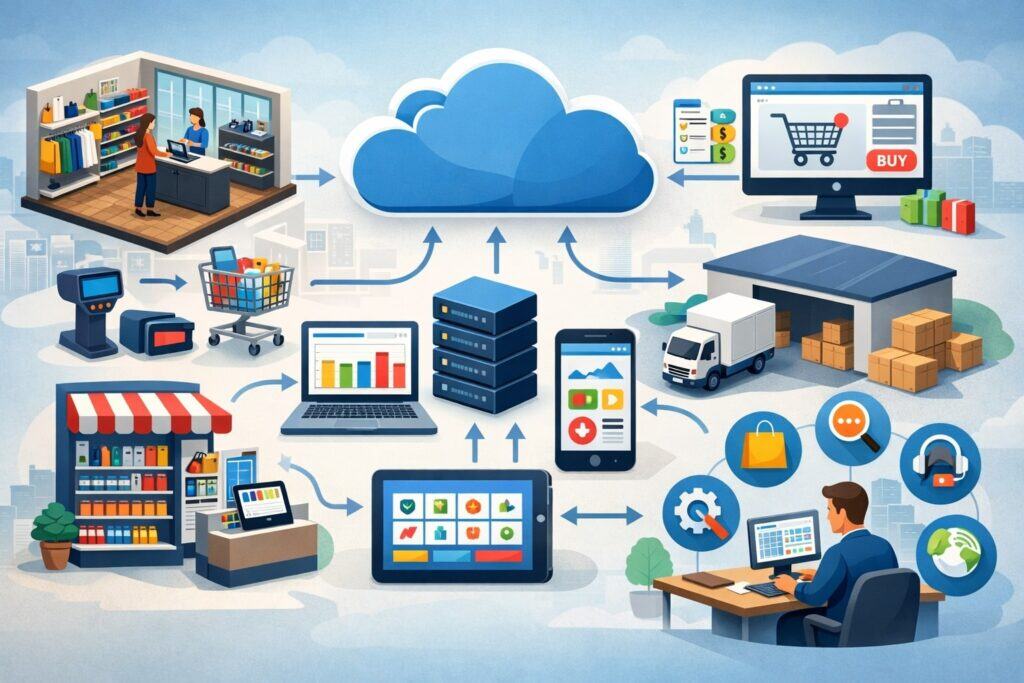
To understand cloud based retail management systems, it helps to picture two layers: the store layer and the cloud layer. The store layer includes POS devices (tablets, terminals, barcode scanners, receipt printers, cash drawers) and often a local network. The cloud layer includes hosted databases, application servers, analytics services, and integration connectors.
When a cashier rings up a sale, cloud-based retail management systems record the transaction in the cloud. Inventory is reduced, taxes are calculated, and payment data is processed through an integrated payment gateway.
Managers can see the sale in dashboards immediately, even if they’re not physically in the store. For multi-location retailers, cloud based retail management systems can also route inventory rules across stores, enabling transfers, replenishment, and ship-from-store logic.
Many cloud-based retail management systems offer offline or “degraded” modes. If the internet drops, the POS can still accept certain transactions, store them locally, and sync later. This is critical for business continuity, especially during peak hours.
The best cloud based retail management systems are designed with smart syncing that prevents double-counting or data conflicts.
A key concept is centralized configuration. With cloud based retail management systems, you can define user roles, discount limits, tax settings, product categories, and receipt templates in one admin panel.
Those settings are applied across devices and locations automatically. This reduces errors and keeps operations consistent, which is essential for compliance, training, and brand experience.
Key Modules Inside Cloud Based Retail Management Systems
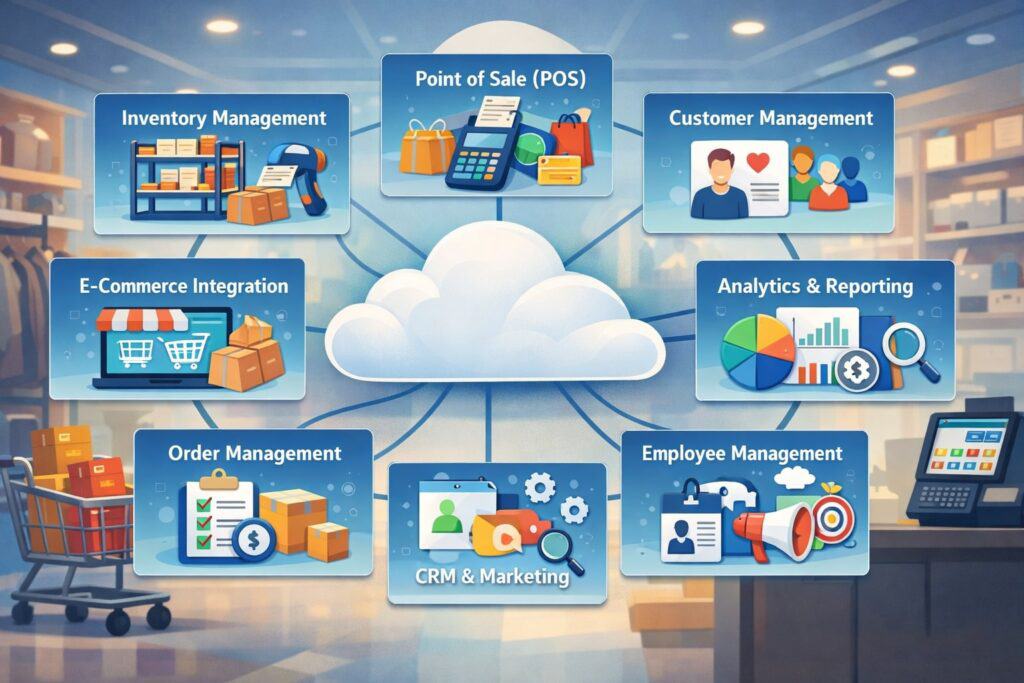
Cloud-based retail management systems typically include multiple modules that work together. Even if a vendor markets them as “all-in-one,” it’s helpful to evaluate each module as its own capability, because weaknesses in one area can create operational pain later.
At a minimum, cloud based retail management systems include POS, inventory management, and reporting. Many also include customer profiles, loyalty tools, purchasing and vendor management, employee scheduling, and multi-location controls.
The true value of cloud based retail management systems comes from how tightly these modules share data. For example, customer purchase history can influence personalized promotions, and inventory velocity can influence reorder points and vendor negotiations.
Modern cloud based retail management systems also act as integration hubs. They connect with eCommerce platforms, shipping services, accounting tools, marketing automation, and payment processors. This means you can build a retail tech stack that fits your exact needs without losing data consistency.
When comparing cloud based retail management systems, don’t just ask “Does it have the feature?” Ask: “How deep is the feature?”
For example, inventory management can mean anything from simple stock counts to advanced forecasting, serial number tracking, and automated replenishment. Cloud based retail management systems vary widely, so a clear module-by-module review prevents unpleasant surprises during implementation.
Point of Sale Features in Cloud Based Retail Management Systems
Fast Checkout, Flexible Selling, and Returns
Point of sale is often the most visible part of cloud based retail management systems. The POS experience needs to be fast, intuitive, and reliable. Modern checkout flows support barcode scanning, quick product search, custom buttons, discounts, refunds, exchanges, gift receipts, and digital receipts.
Cloud-based retail management systems should also support split payments, partial payments, gift cards, and store credit handling with accurate accounting.
Returns are where many systems break down. Strong cloud based retail management systems track the original sale, apply return policies consistently, and prevent fraud with receipt lookups and customer verification options. They also update inventory correctly—whether the item goes back to shelf stock, damaged stock, or a quarantine location for inspection.
A high-quality POS inside cloud-based retail management systems also supports flexible selling: special orders, pre-orders, deposits, layaway, and quote-to-sale workflows. These features matter for retailers selling high-value goods or custom items.
If your store team frequently handles phone orders, in-store pickup, or shipping orders, cloud based retail management systems should support these tasks without workarounds.
Finally, device management matters. Cloud-based retail management systems should allow you to deploy multiple registers, handheld devices, or kiosk setups while maintaining consistent permissions and reporting. This reduces bottlenecks and keeps checkout smooth during busy seasons.
Inventory Management Features in Cloud Based Retail Management Systems
Stock Accuracy, Variants, and Multi-Location Control
Inventory is where cloud based retail management systems deliver the biggest operational payoff. Accurate inventory reduces stockouts, cuts overstock, and improves cash flow.
Cloud-based retail management systems should track stock by SKU, variant, and location. Variants may include size, color, material, or bundled configurations. The system should also support unit conversions if you sell items measured in cases, packs, or weights.
Multi-location inventory is a major differentiator. Strong cloud-based retail management systems let you see stock levels per store, warehouse, or fulfillment point. They should support transfers, inter-store replenishment, and location-based reorder points.
For omnichannel operations, cloud based retail management systems also need to handle “available to sell” logic that accounts for pending orders and reserved pickup items.
Cycle counts and stock adjustments are essential workflows. Cloud-based retail management systems should allow scheduled counts, blind counts, discrepancy approvals, and audit trails.
Barcode-driven receiving and counting reduces errors and speeds training. If you sell serialized products or regulated categories, cloud-based retail management systems should support serial number tracking and traceability.
Inventory intelligence is where cloud-based retail management systems become strategic. Look for velocity reporting, aging reports, margin by SKU, and forecasting capabilities. Even basic forecasting—like suggested reorder quantities based on sales trends—can reduce stress and help you plan seasonal purchasing confidently.
Customer and Loyalty Tools in Cloud Based Retail Management Systems
Building Repeat Business With Unified Customer Profiles
Cloud-based retail management systems increasingly include customer relationship tools because customer retention drives long-term profit. A unified customer profile typically stores purchase history, returns, preferences, contact information, loyalty points, and notes.
When a customer shops in-store or online, cloud based retail management systems should attach that activity to the same profile, so your team sees the full relationship.
Loyalty programs are more effective when they are frictionless. Cloud-based retail management systems can manage points, tiers, rewards, referrals, and targeted offers.
The best platforms let you trigger promotions based on behavior, such as “spent over a threshold,” “hasn’t visited in 60 days,” or “buys from a specific category.” These capabilities help you move beyond generic discounts and into smarter incentives.
Customer tools also support better service. With cloud-based retail management systems, staff can quickly look up past purchases for sizing help, warranty validation, or reorder needs. For appointment-based retail, customer profiles can store scheduling history and service notes.
Privacy and consent are also critical. Cloud based retail management systems should support opt-in management for emails and texts, plus secure handling of customer data.
Even simple features like consent tracking and easy data export help your business stay aligned with evolving privacy expectations while still benefiting from personalized retail experiences.
Reporting and Analytics in Cloud Based Retail Management Systems
Turning Retail Data Into Daily Decisions
Reporting is one of the biggest reasons retailers adopt cloud-based retail management systems. Instead of waiting for end-of-day exports or reconciling spreadsheets, cloud based retail management systems provide real-time dashboards that show sales, margins, inventory value, and performance by location, category, and employee.
Start with operational reporting: daily sales, return rates, discounts, tax totals, payment method breakdown, and cash drawer reconciliation. Cloud-based retail management systems should also provide audit logs so managers can track voids, overrides, and permission-based actions. This protects profit and reduces shrink.
Next is performance reporting: best sellers, worst sellers, sell-through, gross margin by SKU, and category contribution. Cloud based retail management systems help you spot what’s working and what needs clearance. Pair this with inventory aging reports to prevent cash from being trapped in slow-moving stock.
Customer reporting adds another layer: repeat purchase rates, average order value, visit frequency, and cohort behavior. Cloud-based retail management systems that connect sales and customer profiles can reveal which segments are most valuable and which promotions actually drive profitable growth.
Finally, advanced cloud based retail management systems may offer predictive analytics: demand forecasting, replenishment suggestions, and anomaly detection (like unusual refund spikes). Even if you start with basic reports, choosing cloud-based retail management systems with a strong analytics roadmap can protect your future upgrade path.
Employee and Operations Management in Cloud Based Retail Management Systems
Permissions, Scheduling, and Consistent Store Execution
Retail operations depend on consistent execution. Cloud-based retail management systems support this by controlling permissions, standardizing workflows, and giving managers tools to run teams efficiently.
A good system lets you create roles (cashier, supervisor, manager, admin) with granular controls for discounts, refunds, voids, price edits, and reporting access.
Scheduling and time tracking are common add-ons in cloud based retail management systems. When integrated, sales performance and labor data can be reviewed together, helping managers optimize staffing levels.
This matters because labor is often one of the largest costs in retail, and small improvements in scheduling can meaningfully improve profit.
Store execution tools may include task lists, checklists, and internal notes. Some cloud based retail management systems support multi-store communications and policy updates, which is helpful for chains and franchises. Even basic tools—like standardized opening/closing procedures—reduce mistakes and improve training.
Training is another overlooked benefit. When cloud-based retail management systems are consistent across locations, employees can move between stores with less friction. This makes it easier to scale, cover shifts, and maintain service quality.
Operational consistency is not glamorous, but it is one of the biggest long-term advantages of adopting cloud based retail management systems.
Integrations and Ecosystems in Cloud Based Retail Management Systems
Connecting eCommerce, Accounting, Shipping, and More
No retailer runs on one tool alone. Cloud based retail management systems must integrate with the rest of your tech stack. Common integrations include eCommerce platforms, accounting software, email marketing tools, shipping labels, marketplaces, and customer support systems.
The difference between “integrated” and “patched together” is whether the data stays consistent without constant manual fixes.
A strong integration ecosystem begins with clean APIs. Cloud-based retail management systems should offer documented APIs or reliable app marketplaces. This allows your business to connect specialized tools without losing the central control that cloud based retail management systems provide.
Payments are a major integration point. Many cloud-based retail management systems offer built-in payment processing, while others allow multiple processors.
Either way, the system should support secure tokenization, fast settlement reporting, chargeback visibility, and reconciliation tools. Payment integration affects checkout speed, reporting accuracy, and customer experience.
Inventory and fulfillment integrations are also essential. If you ship orders, cloud-based retail management systems should connect to shipping carriers and label systems, while syncing tracking numbers back to customer records.
For omnichannel retailers, integrations that keep inventory accurate across channels are crucial for avoiding overselling.
When evaluating cloud based retail management systems, look beyond the marketing list of integrations. Ask how often they break, how the sync works, and what happens when an order is edited, returned, or partially fulfilled. Integration reliability is one of the biggest predictors of operational sanity.
Security and Compliance in Cloud-Based Retail Management Systems
Protecting Data, Payments, and Customer Trust
Security is not optional. Cloud-based retail management systems handle sensitive business and customer data, plus payment workflows.
The most important standard in retail payments is PCI compliance, and cloud based retail management systems should support secure payment flows that reduce your compliance burden. This typically involves encryption, tokenization, and keeping card data out of your environment.
Beyond payments, cloud-based retail management systems must protect employee access and customer information. Look for features like two-factor authentication, role-based access controls, secure password policies, and detailed audit trails.
If an employee can change prices or issue refunds, you need visibility into who did what and when. Cloud based retail management systems that provide strong logging reduce fraud and simplify internal investigations.
Vendor security practices matter too. Many retailers ask for third-party assurance such as SOC reports, security documentation, and incident response processes. Cloud-based retail management systems should also provide regular updates and patching.
One benefit of cloud delivery is that security fixes can be deployed quickly without waiting for each store to update software manually.
Finally, privacy expectations are rising. Cloud based retail management systems should support consent management, data access controls, and secure export/delete processes when customers request it. Retailers that treat security as a core buying criterion end up with fewer disruptions, fewer losses, and stronger customer loyalty over time.
Benefits of Cloud Based Retail Management Systems
Cloud-based retail management systems offer benefits that go beyond “access from anywhere.” One major advantage is real-time visibility. You can track sales, inventory, and employee activity instantly, across locations. This makes it easier to respond to trends, fix issues quickly, and prevent problems from becoming expensive.
Another benefit is scalability. Cloud based retail management systems allow you to add registers, users, and locations without rebuilding infrastructure. Updates happen centrally, so new features and improvements arrive without disruptive manual upgrades. This reduces IT dependency and lowers the operational friction of growth.
Cloud-based retail management systems also improve customer experience. Unified customer profiles, consistent pricing, flexible fulfillment options, and smooth returns build trust and increase repeat business. When the system is connected, staff can provide better service because information is easy to find.
Efficiency gains are often the biggest financial impact. Cloud-based retail management systems reduce manual entry, eliminate spreadsheet reconciliations, and streamline purchasing and inventory workflows. Over time, these savings show up in lower labor costs, fewer errors, fewer stockouts, and improved gross margin.
Finally, cloud based retail management systems strengthen decision-making. Instead of guessing, you use reporting and analytics to guide purchasing, promotions, staffing, and product strategy. That shift—from intuition-only to data-supported operations—is what helps retailers stay competitive as customer expectations continue to evolve.
Challenges and Common Pitfalls of Cloud Based Retail Management Systems
Cloud-based retail management systems are powerful, but they’re not magic. One common challenge is internet dependency. While many cloud based retail management systems offer offline modes, not all offline modes are equal.
Some only allow basic sales, and some restrict returns or inventory changes during outages. Retailers need a realistic continuity plan, including reliable internet, backup connectivity options, and clear procedures for offline scenarios.
Another pitfall is poor data migration. If product catalogs are messy, SKUs are duplicated, or vendor data is incomplete, the new system will reflect that chaos. Cloud-based retail management systems perform best when your product data, categories, and inventory counts are clean. Migration needs planning, validation, and time for testing.
Integration complexity is also a risk. Cloud based retail management systems often sit at the center of your stack, so changes ripple outward. If your eCommerce platform, accounting setup, or shipping process is unusual, you may need additional configuration or custom integration work. This is why integration testing is a core part of implementation.
Vendor lock-in is another concern. Some cloud based retail management systems bundle payments, hardware, and software tightly, making it costly to switch later. This isn’t always bad, but retailers should understand contract terms, data export options, and what happens if they outgrow the platform.
The good news is that most pitfalls are preventable. Choose cloud-based retail management systems based on fit, plan implementation carefully, and prioritize reliability, reporting accuracy, and long-term scalability over flashy features.
Implementation Roadmap for Cloud Based Retail Management Systems
Planning, Migration, Training, and Go-Live
Implementing cloud-based retail management systems is a project, not a quick install. A strong rollout usually starts with discovery. You map workflows: checkout, returns, purchasing, receiving, transfers, cycle counts, promotions, and reporting.
The goal is to configure cloud-based retail management systems to match how your business actually runs, while improving weak spots.
Next comes data preparation. Product catalogs, SKUs, barcodes, vendor lists, pricing, tax settings, customer lists, and inventory counts must be cleaned and standardized. Cloud based retail management systems reward clean data with reliable reporting. Many retailers underestimate this step, but it’s one of the most important.
Then you test. Set up a sandbox store, run sample transactions, practice returns, test discounts, and verify inventory movements. If you’re using eCommerce, test orders end-to-end: purchase, fulfillment, cancellation, refund, and exchange. Cloud based retail management systems should produce consistent numbers across every scenario.
Training is where adoption happens. Use role-based training: cashiers learn checkout and returns, managers learn reporting and approvals, and inventory teams learn receiving and counts. Keep training realistic and hands-on. Cloud-based retail management systems that feel confusing at go-live will slow sales and frustrate staff.
Finally, go-live should be staged when possible. Some retailers roll out one location first, then expand. Others go live during a quieter period. The best cloud based retail management systems vendors provide checklists and support during the launch window.
With careful planning, cloud-based retail management systems can be deployed smoothly without disrupting customer experience.
Cost, Pricing Models, and ROI of Cloud Based Retail Management Systems
Cloud-based retail management systems are typically priced as subscriptions. Common pricing models include per-location fees, per-register fees, or per-user fees. Some vendors bundle core modules and charge extra for advanced inventory, loyalty, eCommerce connectors, or analytics. Hardware, payment processing, and implementation services may be separate costs.
To evaluate ROI, start with the biggest measurable gains. Cloud based retail management systems often reduce labor spent on manual inventory updates, price changes, end-of-day reconciliation, and multi-channel order management.
If your team spends hours every week reconciling reports or fixing inventory mismatches, cloud-based retail management systems can convert that time into customer-facing work.
Inventory improvements can also drive ROI. Better forecasting and reorder points reduce stockouts and overstock. That means more sales captured, fewer markdowns, and less cash tied up in slow-moving products. Over time, these benefits often exceed the subscription cost of cloud based retail management systems.
Fraud reduction is another ROI factor. Role-based permissions, audit trails, and anomaly detection can reduce unauthorized discounts and suspicious refunds. Even small reductions in shrink can justify the investment in cloud-based retail management systems.
When comparing costs, avoid focusing only on the monthly fee. Evaluate total cost of ownership: hardware, processing rates, support, add-ons, integration work, and the operational cost of running a system that doesn’t fit.
The best cloud based retail management systems are the ones that pay back through operational clarity and scalable growth.
How to Choose the Right Cloud Based Retail Management Systems Vendor
Choosing cloud based retail management systems should start with your business model. A boutique store with simple inventory has different needs than a multi-location retailer with complex fulfillment.
Define must-have workflows first: offline selling, multi-location transfers, serialized inventory, loyalty tiers, vendor purchasing, or eCommerce integration. Then evaluate vendors against those real-world scenarios.
Request demos that match your workflow, not generic presentations. Ask the vendor to run through a complete customer journey: sale, discount, return, exchange, gift card, and loyalty redemption.
Then test the inventory journey: receiving, stock transfer, cycle count, adjustment, and reorder report. The strongest cloud based retail management systems handle edge cases cleanly.
Support quality matters as much as features. Cloud-based retail management systems become mission-critical, so downtime or slow support is expensive. Ask about support hours, response times, onboarding resources, and whether support is included or paid.
Also evaluate data ownership and portability. Cloud based retail management systems should allow data exports for products, customers, and transactions. Understand contract length, cancellation terms, and whether you can switch payment processors or hardware if needed.
Finally, check the roadmap and reliability. Retail evolves quickly, and cloud based retail management systems should evolve with it. Vendors with frequent updates, stable integrations, and clear product direction are more likely to support your growth without forcing a painful platform change later.
Use Cases: Who Benefits Most From Cloud Based Retail Management Systems?
Cloud based retail management systems benefit a wide range of retail models, but some see especially strong advantages. Multi-location retailers gain centralized control. Pricing changes, promotions, and catalog updates can be deployed everywhere instantly. Reporting is consolidated, so leadership can compare locations and identify best practices.
Omnichannel retailers benefit because cloud-based retail management systems help keep inventory accurate across channels. This supports store pickup, ship-from-store, and consistent customer experiences. When inventory is reliable, customer trust increases and operational stress decreases.
Specialty retailers gain value from deeper product management. Cloud based retail management systems that support variants, bundles, vendor catalogs, and advanced reporting help specialty stores manage complex assortments. Loyalty tools also help specialty retailers retain customers in competitive categories.
Pop-up shops and seasonal retail also benefit. Cloud-based retail management systems can be deployed quickly with minimal infrastructure. Temporary locations can be added, configured, and removed without complicated IT work. This is ideal for events, markets, and short-term retail concepts.
Finally, growing retailers benefit from the “future-ready” foundation. Cloud based retail management systems reduce reliance on manual processes. That means when your business grows—more SKUs, more staff, more locations—you don’t need to reinvent operations. You simply scale the system you already have.
Future Trends and Predictions for Cloud Based Retail Management Systems
Cloud-based retail management systems are evolving rapidly, and the next few years will bring major shifts. One trend is deeper AI-driven forecasting and automation.
Instead of static reorder points, cloud based retail management systems will increasingly predict demand by combining sales history, seasonality, promotions, and local factors. The system will recommend purchase orders, suggest transfers between locations, and identify likely stockouts before they happen.
Another trend is “composable” retail technology. Rather than one monolithic platform, retailers will mix specialized tools connected through APIs.
Cloud based retail management systems will act as the central data layer, while retailers plug in best-in-class tools for loyalty, personalization, fulfillment, and analytics. This approach increases flexibility but also demands stronger integration management.
In-store experiences are also changing. Cloud-based retail management systems will support more mobile and self-service workflows: handheld checkout, queue-busting, scan-and-go, and kiosk ordering. As shoppers expect faster service, cloud based retail management systems will prioritize speed, offline resilience, and device flexibility.
Inventory visibility will improve with RFID and smart tagging. As adoption grows, cloud-based retail management systems will integrate real-time inventory tracking, reducing shrink and improving accuracy. This will make omnichannel promises more reliable, including precise pickup windows and ship-from-store availability.
Finally, security and privacy requirements will continue to rise. Cloud based retail management systems will expand built-in security controls, consent management, and audit capabilities. Retailers that choose cloud-based retail management systems with strong security foundations will be better positioned for long-term stability and customer trust.
FAQs
Q.1: What’s the difference between cloud based retail management systems and a traditional POS?
Answer: Traditional POS systems focus mainly on checkout and may store data locally on a register or in a back-office server. Cloud based retail management systems go far beyond checkout.
They combine POS with inventory, customer profiles, purchasing, reporting, and integrations—while keeping data centralized in the cloud. This makes cloud-based retail management systems better suited for modern retail where sales happen across multiple channels and locations.
Another key difference is updates and scalability. Traditional POS often requires manual updates, on-site maintenance, and separate reporting tools.
Cloud based retail management systems update centrally, so features and security improvements roll out faster. Adding new registers or locations is typically easier because cloud-based retail management systems don’t require major infrastructure changes.
The data advantage is also important. With cloud based retail management systems, inventory and sales reporting can be real-time across all stores and online channels. This reduces overselling, improves purchasing decisions, and supports unified customer experiences.
Traditional POS can still work for simple operations, but cloud-based retail management systems are usually the better long-term choice for growth, visibility, and omnichannel workflows.
Q.2: Can cloud based retail management systems work if the internet goes down?
Answer: Many cloud-based retail management systems include offline capabilities, but the details matter. Some allow full checkout with stored transactions that sync later, while others support only limited functions.
The best cloud based retail management systems offer a stable offline mode that can process sales, accept certain payment types, and print receipts while internet connectivity is restored.
However, offline mode usually has limits. Returns, customer lookups, inventory edits, and gift card redemptions may be restricted depending on how cloud-based retail management systems are designed.
That’s why retailers should plan connectivity carefully. A reliable primary connection, plus a backup option like a secondary provider or hotspot, reduces risk.
Operational procedures also help. Retailers using cloud based retail management systems should train staff on what to do during outages: how to handle returns, how to document exceptions, and how to confirm syncing after service returns.
With the right planning, cloud-based retail management systems can remain resilient and avoid major disruptions even during intermittent connectivity issues.
Q.3: How do cloud based retail management systems help with inventory accuracy?
Answer: Cloud-based retail management systems improve inventory accuracy by linking sales, returns, receiving, transfers, and adjustments into one real-time system. When a sale is completed, inventory updates immediately.
When items are received from a vendor, stock levels increase based on the receiving workflow. When a transfer happens between locations, inventory shifts properly with audit trails.
The biggest improvements come from consistent processes. Cloud based retail management systems support barcode scanning for receiving and counts, which reduces human error.
Cycle counts can be scheduled and tracked, with discrepancy approvals and logs. This makes it easier to detect shrink, mis-picks, and data entry mistakes before they become major problems.
Cloud based retail management systems also improve “available to sell” logic for omnichannel retail. Instead of relying on outdated counts, the system can account for pending online orders, reserved pickup items, and location-specific stock.
Over time, retailers using cloud-based retail management systems typically see fewer stockouts, fewer canceled orders, and better customer trust because inventory promises become more reliable.
Q.4: Are cloud based retail management systems secure for payments and customer data?
Answer: Cloud based retail management systems can be very secure, but security depends on vendor practices and your internal controls. For payments, cloud based retail management systems usually rely on PCI-aligned processing flows that use encryption and tokenization.
This helps reduce exposure to card data and lowers compliance risk. A secure setup typically ensures card data is never stored in your retail environment in readable form.
For customer and employee data, cloud-based retail management systems should include role-based access controls, audit logs, and options like two-factor authentication.
These controls reduce unauthorized access and provide accountability when sensitive actions occur, like refunds or price overrides. Secure cloud based retail management systems also provide regular software updates, which is important because vulnerabilities change over time.
Retailers still play a role. Strong passwords, limited admin accounts, staff training, and device security policies are essential. Cloud based retail management systems are safest when you combine vendor-grade security with good operational discipline.
When evaluated and configured properly, cloud-based retail management systems are often more secure than older on-site systems that don’t receive frequent updates.
Q.5: How long does it take to implement cloud based retail management systems?
Answer: Implementation timelines vary based on complexity. A small retailer with a clean product catalog may deploy cloud-based retail management systems quickly, while a multi-location retailer with complex inventory and integrations will take longer. The biggest timeline factors are data preparation, integration testing, and staff training.
Cloud based retail management systems implementation usually includes workflow mapping, catalog setup, tax and receipt configuration, user roles, hardware setup, and payment processing activation.
Data migration often takes longer than expected because product categories, SKUs, barcodes, and vendor lists need cleanup. If you skip this work, cloud-based retail management systems may go live with messy reporting and inventory issues.
Training and testing are essential steps. Retailers should run test transactions, returns, receiving workflows, and end-of-day reconciliation before launch. Many successful rollouts start with one location or a pilot register.
With realistic planning, cloud based retail management systems can be implemented smoothly and without major disruption. The key is treating it as an operational project—not just a software install.
Q.6: What should I look for when comparing cloud-based retail management systems?
Answer: Start by identifying must-have workflows. If you need multi-location transfers, advanced inventory counting, offline selling, loyalty tiers, or omnichannel fulfillment, cloud-based retail management systems must support those requirements without workarounds.
Then evaluate reliability: system uptime, offline mode quality, and reporting consistency. Cloud based retail management systems that fail during busy periods create direct revenue loss.
Next, examine integrations. Cloud-based retail management systems should connect cleanly with your eCommerce, accounting, shipping, and marketing tools. Ask how syncing works and what happens during partial refunds, exchanges, and split shipments. Integration edge cases reveal the real strength of cloud based retail management systems.
Finally, evaluate support, contracts, and data portability. Look for strong onboarding, responsive support, and clear documentation. Understand contract length, cancellation terms, and whether you can export your data easily.
Cloud-based retail management systems are long-term infrastructure, so vendor stability and roadmap matter. The best choice is the one that fits your workflows today while still scaling for future growth and evolving retail expectations.
Conclusion
Cloud-based retail management systems are redefining how retailers operate, compete, and grow. By centralizing POS, inventory, customers, reporting, and integrations, cloud based retail management systems replace fragmented tools with a unified platform. This creates real-time visibility, faster decision-making, and smoother customer experiences across channels.
The strongest value of cloud-based retail management systems comes from operational clarity. Inventory becomes more accurate. Returns become more consistent. Reporting becomes trustworthy.
Employees work within standardized permissions and workflows. These improvements reduce daily friction and free your team to focus on customer service and growth instead of manual reconciliation.
At the same time, cloud based retail management systems require thoughtful selection and implementation. Internet resilience, data migration, integration testing, and training determine whether the rollout feels smooth or stressful.
Retailers that plan carefully and choose cloud based retail management systems based on real workflows—not just feature lists—tend to see the best outcomes.
Looking forward, cloud-based retail management systems will keep evolving with AI forecasting, mobile-first checkout, smarter inventory tracking, composable integrations, and stronger security controls.
Retailers that adopt cloud based retail management systems with a scalable foundation and a clear roadmap will be best positioned to meet rising customer expectations and adapt to whatever retail looks like next.