
How to Negotiate Better Prices With Manufacturers
Negotiating better prices with manufacturers is less about “talking them down” and more about building a business case they can say yes to without taking on unacceptable risk. Manufacturers price based on cost, capacity, cash flow, predictability, and the probability you’ll be a long-term customer who won’t create quality or compliance headaches.
If you want to negotiate better prices with manufacturers consistently (not just once), you need three things: (1) clean data (your demand, specs, and quality requirements), (2) leverage (options, volume, timing, payment terms, or process improvements), and (3) a structured negotiation plan that protects your margin without damaging the relationship.
This guide breaks down the exact steps procurement teams and operators use to negotiate better prices with manufacturers—plus real-world examples, contract language concepts, and forward-looking trends that are changing how pricing works.
Understanding How Manufacturers Build Price
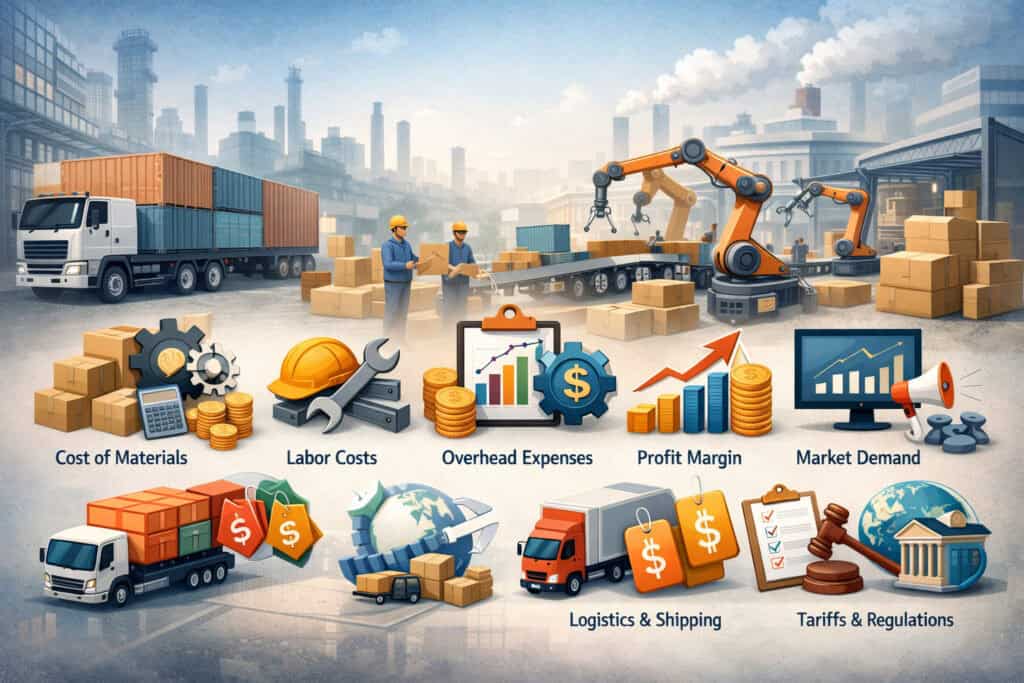
When you try to negotiate better prices with manufacturers, it helps to understand what you’re actually negotiating. A factory quote is usually a blend of direct costs (materials, labor), overhead (utilities, maintenance, QA), risk buffers (scrap, yield loss, warranty exposure), and a profit margin that reflects how busy the factory is and how difficult your product is to produce.
In practice, two buyers can receive very different pricing for the same item because their “total cost to serve” is different. If Buyer A sends perfect drawings, orders in stable monthly batches, pays fast, accepts standard packaging, and has low defect claims, the factory can run that account with less friction.
Buyer B changes specs frequently, demands rush production, delays approvals, and disputes invoices. Buyer B’s price will include “pain.”
To negotiate better prices with manufacturers, focus on reducing the factory’s uncertainty. Uncertainty costs money. The biggest uncertainty drivers are volatile forecasts, unclear specifications, aggressive delivery timelines, frequent engineering changes, and payment risk.
Your negotiation strategy should convert uncertainty into predictability: clearer scope, better planning, simpler logistics, and commercial terms that make the supplier confident.
Also recognize the role of capacity. When a factory is operating near full utilization, they can pick their customers and protect margin. When they have open lines or seasonal dips, you can negotiate better prices with manufacturers by offering volume commitments or filling idle capacity.
Get Your House in Order Before You Ask for a Lower Price

Most pricing negotiations fail before the first call because the buyer isn’t negotiation-ready. If you want to negotiate better prices with manufacturers, you need a clean package that proves you’re a serious, low-risk customer.
Start with a precise specification set: drawings, tolerances, materials, finish, performance requirements, labeling, and packaging. Include a revision-control method so the supplier isn’t guessing which version is current. If the manufacturer must interpret incomplete specs, they’ll price in a “variance buffer” and protect themselves.
Next, quantify demand realistically. A supplier will discount more aggressively when they believe your volume is real and repeatable. Provide a 12-month forecast with assumptions (seasonality, promotions, product launches). Even if it’s not perfect, the act of forecasting reduces perceived risk.
Then define your acceptance criteria. What is the defect threshold? What testing is required? Who pays for rework? If you plan to negotiate better prices with manufacturers, do not leave quality expectations vague; vagueness increases the chance of disputes, and disputes increase pricing.
Finally, know your internal walk-away points: target price, ceiling price, and “must-have” terms (lead time, warranty, tooling ownership). Negotiators who improvise tend to concede too much to “win” the discount—and then lose money later through freight, defects, or chargebacks.
Do a Cost Breakdown Without Demanding a Full “Open Book”

A common mistake is demanding an “open-book” cost model on day one. Many manufacturers will resist because it exposes their competitive structure. A more effective approach is a should-cost model—your estimate of what the product should cost based on materials, cycle time, labor rates, scrap, and overhead norms.
To negotiate better prices with manufacturers, you don’t need perfect precision; you need directional accuracy. Build your should-cost using:
- Bill of materials and commodity benchmarks (resin, steel, aluminum, fabric, PCB components)
- Process steps (molding, CNC, welding, assembly, test, packaging)
- Cycle times and yields (what percent scrap is typical)
- Tooling amortization assumptions
- Logistics and packaging assumptions
Then use the should-cost to ask smarter questions: “If we adjust this tolerance, can we reduce machining time?” “If we standardize packaging, do we cut labor?” “If we commit to quarterly blanket POs, can we reduce setup frequency?”
Manufacturers often lower prices more readily when the path is operational (reduce work, reduce waste) rather than purely commercial (“give me 10% off”). In other words, the fastest way to negotiate better prices with manufacturers is to remove cost drivers they control.
Source Like a Pro: Competition, Benchmarking, and Supplier Fit

You can’t negotiate better prices with manufacturers if you have no alternatives. Leverage comes from options—not threats. That means you need a sourcing process that creates credible competitive tension while still treating suppliers respectfully.
Use a two-layer approach:
- Broad market scan: Identify 10–20 potential suppliers based on capability, certifications, capacity, and industry experience.
- Shortlist qualification: Narrow to 3–5 suppliers who can meet quality, compliance, and lead-time requirements.
When you request quotes, standardize the RFQ package so every manufacturer bids on identical scope. If quotes differ wildly, it usually means the suppliers assumed different materials, packaging, incoterms, or testing.
Cleaning up assumptions is one of the simplest ways to negotiate better prices with manufacturers without compromising quality.
Also benchmark intelligently. Comparing a small, high-mix job shop to a high-volume factory isn’t apples to apples. Fit matters: the right manufacturer for your run size and complexity will often beat the “cheapest” supplier over time because they’re efficient at your product type and less likely to create costly disruptions.
Use RFQs and Quote Reviews to Find Negotiation Levers
If you want to negotiate better prices with manufacturers, don’t treat the quote as a single number. Treat it as a set of levers:
- MOQ and price breaks
- Tooling and NRE charges
- Packaging and labeling costs
- Test/inspection fees
- Lead time and expedite premiums
- Payment terms
- Freight assumptions and shipping terms
A structured quote review call is where discounts actually happen. Ask:
- “Which line items are most sensitive?”
- “What volume unlocks the next price tier?”
- “What changes would reduce labor minutes per unit?”
- “If we provide components, can you reduce cost?”
- “If we do a blanket order with releases, can we reduce setup charges?”
Manufacturers often “hide” margin in packaging, testing, or expedite fees when unit pricing is under pressure. A good negotiator doesn’t just chase unit price; they reduce total landed cost.
Real-world example: A consumer goods brand wanted to negotiate better prices with manufacturers for a molded part.
The factory wouldn’t cut unit price, but they agreed to (1) reduce packaging labor by switching to bulk cartons, (2) remove redundant final inspection once process capability data was provided, and (3) eliminate expedite fees by moving to a fixed monthly ship window. The landed cost dropped more than the requested unit discount—without a bruised relationship.
The Highest-Impact Negotiation Strategies That Don’t Damage Quality
When buyers hear “negotiate better prices with manufacturers,” they often think: push hard, threaten to move, demand discounts. That sometimes works short-term, but it’s risky—especially if quality or delivery failures will cost you more than the discount.
These strategies typically deliver better outcomes:
1) Bundle volume across SKUs
Factories love predictability. If you can consolidate related SKUs or commit across a product family, you can negotiate better prices with manufacturers by improving line utilization.
2) Offer forecast visibility and schedule discipline
Provide rolling forecasts, lock near-term quantities, and keep changes controlled. Lower chaos = lower pricing buffers.
3) Trade concessions (give to get)
Ask for a price reduction tied to something concrete: longer lead time, simplified packaging, reduced inspection redundancy, or consolidated shipments.
4) Improve payment terms strategically
Sometimes you can negotiate better prices with manufacturers by paying faster (e.g., Net 10) if the discount outweighs your cost of capital. Other times, extending terms improves your cash flow more than a unit discount would.
5) Negotiate on total cost, not only unit price
Tooling amortization, warranty terms, and freight can swing profitability. Unit price is only one lever.
6) Lock pricing with indexed adjustments
For commodity-heavy products, negotiate a pricing formula tied to an index (materials) with caps, floors, and review cadence. This reduces the supplier’s risk and can lower base price.
Terms and Contracts: Where the Real Money Is
If you’re serious about negotiating better prices with manufacturers, you must negotiate contract terms with the same intensity as unit price. A “cheap” price with vague terms often becomes expensive later.
Key contract components that influence cost:
Price validity and review windows
Specify how long pricing is valid and how changes are handled. Short validity windows increase your risk and reduce your negotiating power later.
Quality agreements and remediation
Define acceptance criteria, inspection methods, and what happens when defects occur (rework, replacement, credits). Clear rules reduce the supplier’s fear of unpredictable chargebacks—making it easier to negotiate better prices with manufacturers up front.
Tooling ownership and use rights
If you pay for tooling, spell out ownership, maintenance responsibilities, and what happens if you change suppliers. Tooling ambiguity is a common hidden cost.
Warranty and liability boundaries
Suppliers price higher when warranty exposure is unclear. Right-size warranty terms to your product risk and end-market expectations.
Change control and engineering revisions
Define ECO processes and costs. Frequent changes increase supplier risk and inflate pricing buffers.
Shipping Terms, Risk Transfer, and Why Incoterms Matter
Many pricing disputes happen because the buyer and supplier assume different responsibilities for freight, insurance, customs, and risk transfer. If you want to negotiate better prices with manufacturers, you need clarity on shipping terms.
Incoterms® are standardized trade terms published by the International Chamber of Commerce that define who pays and who bears risk at each stage. Manufacturers often quote under terms that look cheaper but shift risk and cost to you later.
For example, a low unit price under a term where the buyer controls freight can become expensive if you face high shipping rates, port congestion, or unexpected accessorial charges. Conversely, a term where the supplier arranges delivery may hide margin in freight.
A practical approach:
- Decide whether you want freight control (more transparency) or supplier-managed delivery (simplicity).
- Align incoterms with your operational ability to manage logistics.
- Negotiate freight as a separate line item when possible.
If you’re importing, remember that customs rules can affect landed cost. For low-value shipments, the de minimis threshold under Section 321 is widely referenced at $800 in official guidance. That threshold and enforcement details matter to your shipping strategy and can influence how you structure orders and shipments.
Compliance and Ethical Sourcing: Price Negotiation’s New Non-Negotiables
Modern procurement teams can’t chase the lowest price without considering compliance. Manufacturers are increasingly pricing in the cost of traceability, documentation, and audits—especially in higher-risk categories.
If you want to negotiate better prices with manufacturers while staying protected, build compliance requirements into your supplier qualification and contracts. A major example is forced labor enforcement.
The Uyghur Forced Labor Prevention Act (UFLPA) created a rebuttable presumption affecting certain goods and supply chains, and government agencies update strategy and enforcement focus areas over time.
If your product category or raw materials touch high-risk regions or entities, suppliers who can prove traceability may cost more—but they also reduce seizure and disruption risk.
Marketing and labeling rules matter too. If your products make environmental claims, the FTC’s environmental marketing guidance (the “Green Guides”) exists to help prevent deceptive claims under Section 5 of the FTC Act and addresses how claims should be substantiated.
Strong documentation and substantiation requirements can add cost, but negotiating early on testing, certifications, and documentation flow can prevent painful surprises.
Relationship Management: The “Preferred Customer” Advantage
The cheapest factory isn’t always the most profitable partner. If your supply chain depends on stable quality and on-time delivery, becoming a “preferred customer” can unlock better pricing than aggressive haggling ever will.
Preferred customers typically:
- Pay on time
- Provide accurate forecasts
- Resolve quality issues professionally (data-driven, not emotional)
- Avoid scope creep
- Respect manufacturing realities (lead times, capacity constraints)
Manufacturers reward this behavior with:
- Better price breaks
- Priority scheduling during peak periods
- Faster engineering support
- Lower MOQs over time
- More transparency in cost drivers
A practical method to negotiate better prices with manufacturers is to propose a gain-sharing plan: you collaborate on cost reductions (process improvements, material substitutions, yield improvement), then split savings. This turns negotiation into a joint project rather than a battle.
Real-world example: A small electronics brand worked with a contract manufacturer to reduce test time by improving fixture design and pre-screening components. The factory cut labor minutes, improved throughput, and lowered the per-unit price. The brand got a better margin, and the manufacturer improved capacity for other customers.
What to Do When a Manufacturer Won’t Budge on Price
Sometimes you can’t negotiate better prices with manufacturers on unit price because their costs are fixed, capacity is tight, or the quote is already aggressive. In those cases, shift your focus:
Negotiate the structure
- Tiered pricing with volume triggers
- Quarterly rebates based on annual spend
- Waived NRE after a milestone
- Free spare parts or consumables
Negotiate risk removal
- Longer price holds
- Faster replacement terms for defects
- Tooling credits if performance targets are met
Reduce the spec cost
- Adjust tolerances where function allows
- Standardize finishes and materials
- Simplify packaging and labeling
- Remove nonessential cosmetic requirements
You’re still negotiating better prices with manufacturers—just through engineering and operations instead of a blunt discount request.
Future Predictions: Where Manufacturer Pricing Negotiations Are Headed
The playbook for negotiating better prices with manufacturers is changing. Expect these trends to intensify:
1) More dynamic pricing tied to capacity and lead time
Factories are using better planning systems and will price based on how your order fits their schedule. Flexibility will earn discounts.
2) Traceability and compliance costs will become standard line items
Documentation, audits, and supplier mapping are becoming priced services in many categories, especially where forced labor, safety, or environmental claims are relevant.
3) Increased scrutiny on shipping structures and low-value entry programs
De minimis and related enforcement rules are operationally important for certain shipment patterns, and changes in enforcement mechanisms can affect landed cost strategy.
4) More “total value” negotiations, fewer pure price negotiations
Suppliers will compete on reliability, lead time, and engineering support. Buyers who can quantify downtime risk and stockout costs will negotiate from a stronger position.
The teams who win will be the ones who treat negotiation as a system: sourcing, specs, quality, logistics, finance, and compliance all working together to lower total cost.
FAQs
Q.1: How do I negotiate better prices with manufacturers without ordering huge volumes?
Answer: You can negotiate better prices with manufacturers by reducing their cost-to-serve: provide stable forecasts, simplify packaging, accept standard materials, and consolidate shipments. Also ask for tiered pricing where you earn better rates as you grow, instead of demanding the lowest rate immediately.
Q.2: What is the best time to negotiate better prices with manufacturers?
Answer: The best time is before production ramps or right after you’ve proven you’re a low-friction customer. Another strong window is during a supplier’s seasonal capacity dip. If you can fill idle capacity, you often can negotiate better prices with manufacturers more easily.
Q.3: Should I show other quotes to negotiate better prices with manufacturers?
Answer: You can reference market competitiveness without turning it into a threat. A respectful approach is: “We’re reviewing multiple qualified options. If you can help us hit X target through pricing or structure, you’ll be in a strong position.” This keeps negotiations professional and avoids damaging trust.
Q.4: How do I negotiate better prices with manufacturers when raw materials fluctuate?
Answer: Use indexed pricing with agreed review periods, caps, and floors. This reduces the supplier’s risk buffer and can lower baseline pricing. You’re still negotiating better prices with manufacturers—by changing the risk profile rather than demanding a fixed discount.
Q.5: What documents help me negotiate better prices with manufacturers faster?
Answer: A strong RFQ package: drawings and specs, forecast, quality requirements, packaging, test requirements, and shipping terms (including incoterms where relevant). Clear documentation signals low risk, which helps you negotiate better prices with manufacturers.
Conclusion
To negotiate better prices with manufacturers, stop thinking like a bargain hunter and start thinking like a risk manager and operator. Manufacturers lower prices when they believe you will be predictable, efficient to serve, and worth prioritizing.
The highest-performing buyers use clean specs, realistic forecasts, competitive sourcing, should-cost logic, and smart trade-offs (lead time, packaging, payment terms, and process improvements) to unlock savings without sacrificing quality.
If you build a negotiation plan that reduces uncertainty, clarifies shipping and responsibility, and anticipates compliance expectations, you’ll be able to negotiate better prices with manufacturers repeatedly—while also building a supply base that supports growth, protects your brand, and improves your long-term margin.