
What Customers Expect From a Truly Connected Retail Experience
Retail customers no longer think about shopping in separate online and offline categories. They may discover a product on social media, compare it on a website, visit a store to see it in person, order it through an app, and return it at a nearby branch. To the customer, all of these activities are part of one relationship with the same retailer. They expect the experience to remain consistent, convenient, and easy at every stage.
A truly connected retail experience brings digital and physical shopping together so customers can move between channels without starting again. Product information, pricing, availability, loyalty benefits, order history, customer service, and payment options should work together rather than existing in separate systems. Customers want retailers to remember their activity, honour their preferences, and make each interaction feel connected to the one before it.
Meeting modern omnichannel customer expectations requires more than offering a website and a physical store. Retailers need integrated technology, accurate data, well-trained employees, and clear processes that support the entire customer journey. The goal is not simply to be present on several channels. It is to make those channels work together in a way that feels natural to the customer.
Customers Expect One Retailer, Not Separate Channels
Many retailers organise their operations by department. The online store may have a different inventory system, pricing process, customer support team, and return policy from physical locations. Internally, these divisions may make sense, but customers rarely understand or accept them.
When shoppers contact a retailer, they expect employees to see relevant purchases and interactions regardless of where they occurred. A customer who ordered online should not be treated as a stranger when visiting a store. Likewise, someone who saw an item in a branch should be able to find the same information through the retailer’s website or app.
A strong unified commerce journey removes these divisions from the customer’s view. The customer interacts with one brand, one service standard, and one connected system. The experience should feel consistent even when different teams and technologies are working behind the scenes.
Accurate Product Information Across Every Channel
Customers expect product descriptions, sizes, specifications, images, prices, and availability to remain accurate wherever they shop. Conflicting information creates confusion and weakens trust.
For example, a product may appear available on a website but be out of stock when the customer arrives at the store. A promotion shown in an app may not be recognised at checkout. Product features listed online may differ from the information provided by an employee. These gaps make the retailer appear disorganised.
Supporting online and in store shopping requires a central source of reliable product information. Updates should move across websites, apps, marketplaces, kiosks, and store systems as quickly as possible. Customers should not need to confirm basic details several times before making a purchase.
Accurate information also helps employees serve customers confidently because they can access the same product details that shoppers see online.
Real-Time Inventory Visibility
Inventory visibility is one of the most important parts of connected retail. Customers want to know whether a product is available before they travel to a store or complete an order.
A website that shows inaccurate stock levels creates disappointment and wasted time. The customer may place an order that is later cancelled or visit a branch only to discover that the product is unavailable. Repeated experiences like this can push shoppers towards another retailer.
A connected retail experience should provide clear inventory information by location wherever possible. Customers may want to check stock at nearby stores, reserve an item, join a waiting list, or choose delivery from another branch.
Retailers should also communicate uncertainty honestly. If stock information is delayed or limited, the system should explain this rather than presenting inaccurate availability as a guarantee.
Flexible Fulfilment Options
Customers expect retailers to provide several practical ways to receive an order. Home delivery remains important, but it is no longer the only option people value.
Many shoppers want buy online, pick up in store, curbside collection, ship from store, same-day delivery, or pickup from a convenient locker. The preferred option may depend on urgency, delivery cost, travel plans, product type, and personal convenience.
Meeting omnichannel customer expectations means allowing customers to choose the fulfilment method that suits them. These options should be clearly explained during checkout, including expected timing, fees, and pickup instructions.
Flexibility is only valuable when the service is reliable. If a pickup order is not ready when promised or the customer receives unclear instructions, the convenience disappears. Retailers must connect inventory, order management, employee workflows, and customer notifications to make fulfilment options work properly.
Simple Buy Online and Pick Up in Store Services
Buy online and pick up in store has become a common part of modern retail, but customers still encounter inconsistent experiences. Some retailers make pickup quick and easy, while others create long waits and unclear procedures.
Customers expect to know when the order is ready, where to go, what identification to bring, and how long the process should take. They do not want to stand in a regular checkout line after already paying online.
A smooth pickup process supports a stronger unified commerce journey because it connects online browsing and payment with a physical store visit. Staff should be able to locate orders quickly, confirm collection, and handle questions without moving between several systems.
Retailers can also make pickup more valuable by allowing customers to inspect products, exchange sizes, or add items during the visit without creating unnecessary delays.
Consistent Pricing and Promotions
Few things frustrate customers more than seeing one price online and another in the store. They may also receive a promotional code that does not work through a certain channel or discover that loyalty rewards apply only in selected locations.
Customers understand that some promotions may have conditions, but those conditions should be clear before they begin shopping. Hidden exclusions and inconsistent pricing can make the experience feel misleading.
Successful seamless retail experiences require close coordination between pricing, marketing, ecommerce, and store teams. Promotions should be recognised across relevant systems, and employees should understand how to handle valid offers.
Where prices genuinely differ by channel, the retailer should explain the reason clearly. Customers are more likely to accept differences when they are transparent rather than discovered unexpectedly at checkout.
A Connected Shopping Cart
Customers often begin shopping on one device and continue on another. They may add items to a cart on a laptop, review them later through a phone, and complete the purchase in an app or store.
A connected shopping cart allows customers to save progress and continue without rebuilding the order. Wish lists, saved items, recently viewed products, and preferred sizes can also follow the customer across channels when they are signed in.
This continuity is an important part of online and in store shopping because purchasing decisions rarely happen in one moment. Customers compare options, wait for payday, ask for opinions, or visit a store before completing the transaction.
Retailers should make it easy for customers to continue where they stopped while respecting privacy and account preferences.
Easy Returns Across Channels
Returns are a major test of whether a retailer is truly connected. Customers expect a reasonable return process regardless of how the purchase was made.
An online order should often be returnable at a physical store, and employees should be able to find the transaction without demanding printed documents that the customer was never told to bring. Refund timing, original payment methods, and exchange options should be explained clearly.
A connected returns process supports omnichannel customer expectations because it reduces the risk of purchasing through any channel. Customers are more willing to order online when they know they can resolve a problem locally.
Retailers should still protect themselves from fraud, but verification steps should be simple and consistent. A difficult return may cost more than the value of the product if it causes the customer to avoid the retailer in the future.
Personalised Recommendations That Make Sense
Customers often appreciate recommendations when they are relevant and helpful. They may welcome suggestions based on previous purchases, browsing history, preferred styles, or frequently bought items.
However, personalisation becomes irritating when it feels inaccurate, repetitive, or intrusive. A customer who purchased a gift should not automatically receive months of recommendations based on that one item. Someone who already bought a product should not continue seeing the same promotion.
A strong connected retail experience uses customer data carefully to improve convenience rather than simply increasing advertising volume. Recommendations should reflect recent behaviour, context, and customer preferences.
Retailers should also allow people to control marketing choices and understand how their information is used. Trust is essential if personalisation is going to strengthen the relationship.
Recognition Across Store, Web, and App
Loyal customers expect the retailer to recognise them across channels. Their profile, order history, loyalty status, saved addresses, and preferences should not disappear when they move between a website, app, and physical store.
Recognition can make service faster. An employee may be able to view a recent online order, check warranty information, or suggest a compatible product. The customer may access digital receipts or reorder a regular purchase without searching again.
This creates a more useful unified commerce journey because every interaction builds on earlier activity. The customer does not need to repeat the same details each time.
Recognition should still be handled respectfully. Employees should not reveal sensitive information in public or make assumptions that could embarrass the customer. Helpful personalisation should feel supportive, not invasive.
Loyalty Programmes That Work Everywhere
A loyalty programme should not create different experiences depending on where the customer shops. Points, rewards, discounts, and membership benefits should be easy to earn and use across participating channels.
Customers become frustrated when an online purchase does not count towards store rewards or when a coupon available in the app cannot be used at checkout. These limitations weaken the value of the programme.
To support seamless retail experiences, loyalty information should update quickly and remain visible to both customers and employees. Shoppers should be able to check balances, understand reward rules, and apply benefits without unnecessary steps.
The programme should also recognise more than spending. Some retailers reward reviews, referrals, recycling, event participation, or long-term membership. Whatever structure is used, it should remain simple enough for customers to understand.
Fast and Flexible Payment Options
Customers expect checkout to be quick, secure, and suitable for the channel they are using. They may prefer cards, digital wallets, gift cards, store credit, financing options, or a combination of payment methods.
A connected retailer should make these choices available consistently where possible. A digital gift card purchased online should work in a store, and store credit should be visible during online checkout. Customers should not discover that a payment method is limited to one channel after they have already selected products.
Payment flexibility is especially important for online and in store shopping because customers may complete part of a transaction digitally and part physically. For example, they may pay online but request an exchange in a store.
Security must remain strong, but the payment process should not feel unnecessarily complicated. Clear confirmation and receipts help customers feel confident that the transaction was completed correctly.
Mobile-Friendly Experiences
Many customers use smartphones throughout the shopping journey, even when they are inside a physical store. They may check product reviews, compare prices, locate stock, access loyalty cards, scan QR codes, or pay through a mobile wallet.
Retailers should design mobile experiences for these real situations. Pages should load quickly, buttons should be easy to use, and essential information should not be hidden behind complex menus.
A mobile-friendly connected retail experience may also provide store maps, digital receipts, appointment booking, product scanning, and order updates. The goal is not to include every possible feature, but to remove common points of friction.
Customers should not need to download a large app just to view basic information. Retailers should decide whether an app, mobile website, or combination of both best supports customer behaviour.
Helpful Employees With Better Information
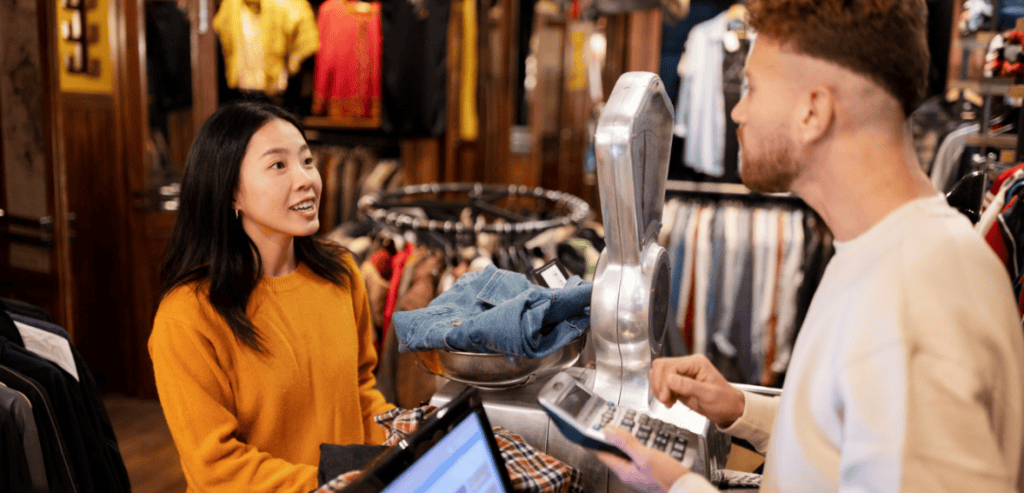
Technology does not replace the importance of store employees. In many cases, connected retail makes staff even more valuable because they can provide advice, solve problems, and support complex purchasing decisions.
Customers expect employees to have access to useful information such as stock availability, product specifications, online orders, delivery updates, and loyalty benefits. Staff should not need to send customers to a website for information that could be checked directly.
Meeting omnichannel customer expectations therefore requires employee tools as well as customer-facing technology. Mobile devices, connected POS systems, and shared customer service records can help employees respond more quickly.
Training is equally important. A system may contain accurate information, but employees need to understand how to find and use it while maintaining customer privacy.
Customer Service That Remembers the Conversation
Customers often contact retailers through several channels. They may begin with a website chat, continue through email, and later call or visit a store. They expect the next employee to understand what has already happened.
Repeating order numbers, explaining the same problem, and resending documents creates frustration. It also makes the retailer appear disconnected.
A strong unified commerce journey includes shared customer service records that allow authorised employees to see previous conversations, actions, and promised follow-ups. This creates continuity even when the customer changes channel.
The system should make ownership clear so requests do not disappear between teams. Customers value quick answers, but they also value accurate updates and honest timelines when a problem requires more investigation.
Consistent Brand Experience
Customers expect the retailer’s identity to feel familiar everywhere. The tone, visual style, service approach, and product promises should remain recognisable across stores, websites, apps, emails, and social media.
Consistency does not mean every channel must look exactly the same. A mobile app serves a different purpose from a physical store. However, customers should feel that each channel belongs to the same business.
Strong seamless retail experiences use consistent language, policies, design elements, and service standards. Conflicting messages weaken trust and can create uncertainty about which information is correct.
Consistency also helps customers learn how the retailer works. Familiar navigation, terminology, and checkout steps make future interactions easier.
Clear Communication During Every Stage
Customers want clear updates after placing an order. They should know whether payment was accepted, when the order is being prepared, when it has shipped, and when it is ready for pickup or delivery.
Communication becomes especially important when something changes. Delays, substitutions, cancellations, and stock problems should be shared quickly with practical next steps.
A good connected retail experience uses email, SMS, app notifications, and account updates carefully. Customers should be able to choose preferred communication methods rather than receiving every update through every channel.
Messages should also be accurate. Sending an order-ready notification before the item has reached the pickup area creates unnecessary frustration. Connected systems must reflect the real status of the order.
Reliable Delivery Tracking
Once customers place an order, they want visibility. They may need to plan their day, arrange for someone to receive the package, or confirm whether an item will arrive before an event.
Reliable tracking is therefore an important part of omnichannel customer expectations. Customers should be able to view order progress through the retailer’s website, app, email, or delivery partner without receiving conflicting information.
Retailers do not always control the final stage of delivery, but they remain responsible for the overall customer experience. Support teams should be able to access tracking details and help when orders are delayed or lost.
Accurate delivery estimates are usually better than optimistic promises that are frequently missed. Trust grows when retailers communicate honestly and respond quickly when problems occur.
Convenient Appointment and Service Booking
Connected retail is not limited to product purchases. Many retailers offer consultations, fittings, demonstrations, repairs, beauty services, technical support, or product installation.
Customers expect to book these services online, view available times, select a location, and receive reminders. Store employees should also be able to access the booking and understand what the customer needs.
This is another example of online and in store shopping working together. The customer may research a product online, book an in-person consultation, complete the purchase in store, and receive follow-up support digitally.
Connected booking reduces phone calls and scheduling errors while giving customers more control. It also helps the retailer prepare by assigning suitable employees and resources in advance.
Smooth Exchanges and Order Changes
Customers sometimes need to change a size, colour, quantity, address, pickup location, or delivery date. A connected retailer should make reasonable changes easy before the order reaches a stage where adjustment is no longer possible.
Rigid systems create unnecessary cancellations and new purchases. Customers may need to contact several departments because the original order cannot be edited across channels.
A well-designed unified commerce journey allows employees to view the full order and understand which changes are still available. The customer should receive confirmation after any update so there is no uncertainty.
Retailers should set clear limits, but those limits should reflect operational needs rather than disconnected technology. Customers are more accepting of restrictions when they are explained clearly.
Privacy and Data Security
Connected retail depends on customer data, but customers expect that information to be protected. They want convenience without losing control over personal details, payment data, browsing activity, and communication preferences.
Retailers should collect only the information needed to provide useful services. Access should be limited according to employee roles, and systems should be protected through appropriate security measures.
Creating seamless retail experiences does not justify using data in ways customers would find surprising. Personalisation should be based on clear consent and reasonable expectations.
When a retailer explains privacy choices in simple language and responds responsibly to concerns, customers are more likely to trust connected services. Security failures can damage the entire relationship, even if the shopping technology itself is convenient.
Accessibility Across Digital and Physical Channels
A truly connected experience should work for customers with different abilities, devices, and levels of digital confidence. Websites and apps should support readable text, keyboard navigation, clear contrast, captions, and screen-reading technology where appropriate.
Physical stores should also provide accessible entrances, layouts, service counters, and assistance. Customers who cannot use one channel easily should have another practical option.
Accessibility strengthens a connected retail experience because it prevents customers from being excluded when moving between digital and physical environments. For example, a customer who finds an online form difficult should be able to receive help in a store or through customer service.
Retailers benefit when more people can shop independently and confidently.
Reducing Friction at Every Step
Customers may not use the term connected retail, but they notice friction. They notice when an item disappears from the cart, a discount does not apply, a return cannot be processed, or a store employee cannot see an online order.
Every extra step increases the chance that the customer will abandon the purchase or choose another retailer. The most effective improvements often come from removing small obstacles rather than adding impressive new features.
Retailers should study the complete journey and identify where customers repeat information, wait unnecessarily, or move between disconnected systems. This analysis helps prioritise changes that create genuinely seamless retail experiences.
Convenience is not about removing every decision. It is about making each action clear, logical, and easy to complete.
Learning From Customer Behaviour
Connected systems provide retailers with a broader view of customer behaviour. They can understand how people discover products, which channels influence decisions, where purchases are completed, and what causes returns or abandonment.
This information should be used to improve service rather than simply increase promotional activity. For example, retailers may discover that customers often view a product online before purchasing it in a store. They may then provide better stock visibility or make product pages easier to access during store visits.
Understanding behaviour supports a stronger unified commerce journey because decisions are based on how customers actually shop. Retailers should avoid giving all credit to the final channel, since earlier interactions may have played an important role in the sale.
Giving Customers Control
Customers want flexibility, but they also want control over how they interact with the retailer. They should be able to choose delivery methods, communication channels, saved preferences, payment options, and privacy settings.
Connected systems should make these choices easy to review and change. Customers should not need to contact support just to update a phone number, remove a payment method, or stop promotional messages.
Giving people control supports omnichannel customer expectations because different shoppers value different forms of convenience. One customer may prefer an app, while another wants email updates and store pickup.
A connected experience should adapt to these preferences rather than forcing every customer through the same path.
Preparing for Future Retail Expectations
Retail expectations will continue changing as technology and customer habits develop. Artificial intelligence, smart fitting tools, virtual product demonstrations, automated pickup, and new payment options may become more common.
Retailers do not need to adopt every trend immediately. The most important foundation is having connected data, flexible systems, and clear customer processes. New technology adds little value when basic inventory, pricing, returns, and service remain disconnected.
A strong approach to online and in store shopping focuses on long-term adaptability. Retailers should choose systems that can share information and support new channels without rebuilding the entire operation.
Customers will continue to expect convenience, accuracy, recognition, and control, even as the tools used to provide them change.
Conclusion
Customers expect retail to work as one connected service rather than a collection of separate channels. They want accurate product information, real-time stock visibility, consistent pricing, flexible fulfilment, easy returns, useful personalisation, and customer service that remembers previous interactions.
A successful connected retail experience allows people to move naturally between websites, apps, stores, delivery services, and support channels. Meeting omnichannel customer expectations requires retailers to connect technology, inventory, customer data, payments, employees, and policies behind the scenes.
The purpose of a unified commerce journey is not to add more digital features. It is to make online and in store shopping feel like parts of the same relationship. When retailers remove unnecessary friction, protect customer information, and provide consistent service, they create the seamless retail experiences that modern shoppers increasingly expect.