Retail Digital Transformation: How Technology Is Reshaping the Modern Store
Retail has always been a reflection of the way of living of people. From small neighborhood stores to giant shopping malls, the physical store has been adapting to the changing expectations of consumers. Today, another major change is in progress. Technology is changing the way retailers function, engage with consumers, and run their businesses. This change, commonly referred to as retail digital transformation, is redefining what it means to run a store in today’s world.
Consumers do not anymore divide their online and offline shopping experiences into two separate ones. They demand convenience, personalization, and speed irrespective of where they engage with a brand. Retailers are adapting to these demands by embracing new technologies, automation, and data-driven solutions to meet these demands. Retail technology trends are now influencing everything from inventory to marketing. A successful digital retail strategy is no longer a choice but a necessity.
The Shift From Traditional Retail to Digital Integration
For many years, retail business operations were dependent on manual tracking, physical point-of-purchase displays, and direct face-to-face transactions. Sales were handled using simple billing machines, inventory was counted manually, and customer relations were handled one on one at the counter. Although this approach promoted excellent human relationships, it did not promote efficiency and scalability, which are necessary in today’s competitive retail marketplace. The retail digital transformation journey began when retail businesses began adopting computerized billing systems and inventory management software.
With technological evolution, retailers have started to combine online shopping platforms with brick-and-mortar stores. Current retail technology trends focus on omnichannel retailing, which allows online orders to be processed in retail stores and returns to be handled seamlessly between online and offline platforms. A retail digital strategy should be designed in such a way that customers can switch between online and offline experiences without any confusion. The retail technology revolution has led to the development of retail stores that function as hubs and are linked to online platforms such as websites, mobile applications, and social media.
Omnichannel Experiences and Connected Shopping
One of the core aspects of retail digital transformation is the development of omnichannel systems. Customers want the flexibility to browse online, check availability in a nearby store, and choose between home delivery or in store pickup. Retailers who align their systems across platforms create smoother customer journeys that reduce friction.
Retail technology trends highlight the growing importance of real time inventory visibility. Customers can see whether a product is available before visiting the store, saving time and frustration. A thoughtful digital retail strategy integrates data from warehouses, stores, and online platforms into a unified system. This approach represents modern retail innovation by aligning every channel around customer convenience. When digital and physical systems work together seamlessly, shopping becomes more efficient and satisfying.
Smart Point of Sale Systems and Real Time Data
Contemporary billing counters are not just cash registers. Today, point of sale systems are integrated with cloud solutions. This enables retailers to access the performance of their business from anywhere. The system analyzes sales trends, inventory, and even customer preferences. Digital transformation in the retail industry is mainly influenced by the trend of moving towards centralized data management.
Retail technology trends indicate that data analysis is emerging as a significant tool for decision-making. Retailers can analyze which products are selling the most, during which time customers are most active, and accordingly modify their pricing strategies. A sound digital retail strategy enables companies to make decisions quickly based on changing demand patterns instead of making assumptions. This emphasis on data analysis is one of the most significant examples of innovation in the retail industry, where data is used to make operations smarter and financially more successful.
Inventory Management and Supply Chain Technology
Inventory management has always been a problem for the retail industry. Too much inventory results in high holding costs, while not enough leads to lost sales. Digital transformation in retail has brought about automated tracking systems that provide instant updates to the inventory level after every sale. Barcode scanning, RFID technology, and notifications help ensure accuracy even across multiple locations.
The retail technology trend is now focusing on supply chain visibility. Retailers can monitor their shipments, measure supplier performance, and predict demand through predictive analytics. A properly implemented digital retail strategy ensures that products flow smoothly from suppliers to the shelves. Innovation in retail technology in this aspect eliminates waste, improves cash flow, and provides a better customer experience through reduced stockouts. Technology allows retailers to achieve a balance between availability and efficiency.
Personalization Through Data Analytics
Customers today expect brands to understand their preferences. Retail digital transformation enables businesses to collect and analyze purchase data, browsing patterns, and engagement history. Loyalty programs and mobile apps play an important role in gathering valuable insights that can be used to tailor offers and recommendations.
Retail technology trends show that personalization increases customer retention and lifetime value. By developing a targeted digital retail strategy, retailers can send customized promotions, recommend complementary products, and adjust messaging based on shopping behavior. This level of personalization is a clear example of modern retail innovation because it blends data with human insight. Instead of one size fits all marketing, retailers create individualized experiences that strengthen relationships and drive repeat sales.
AI and Predictive Insights
AI has moved from being a futuristic concept to a practical retail tool. Retail digital transformation now includes machine learning systems that forecast trends, optimize pricing, and detect patterns in consumer behavior. These tools help retailers anticipate demand rather than react to it.
Retail technology trends also include chatbots and virtual assistants that improve customer service. Online shoppers can receive instant answers to common questions, while store associates can access detailed product information through handheld devices. A forward thinking digital retail strategy incorporates these tools to improve efficiency and engagement. Modern retail innovation powered by AI enhances both backend operations and customer facing interactions, creating a smarter retail environment.
Contactless Payments and Digital Checkout
Payment systems have undergone significant changes in recent years. Customers now use contactless cards, mobile wallets, and QR based systems to complete transactions quickly. Retail digital transformation has streamlined checkout processes, reducing long lines and improving satisfaction.
Retail technology trends indicate that self checkout kiosks and mobile point of sale devices are becoming standard in many stores. These tools allow staff to assist customers on the sales floor rather than being tied to fixed counters. A well implemented digital retail strategy integrates payment systems with inventory and sales analytics. Modern retail innovation in checkout technology creates a faster, more flexible shopping experience that adapts to customer preferences.
In Store Technology and Interactive Displays
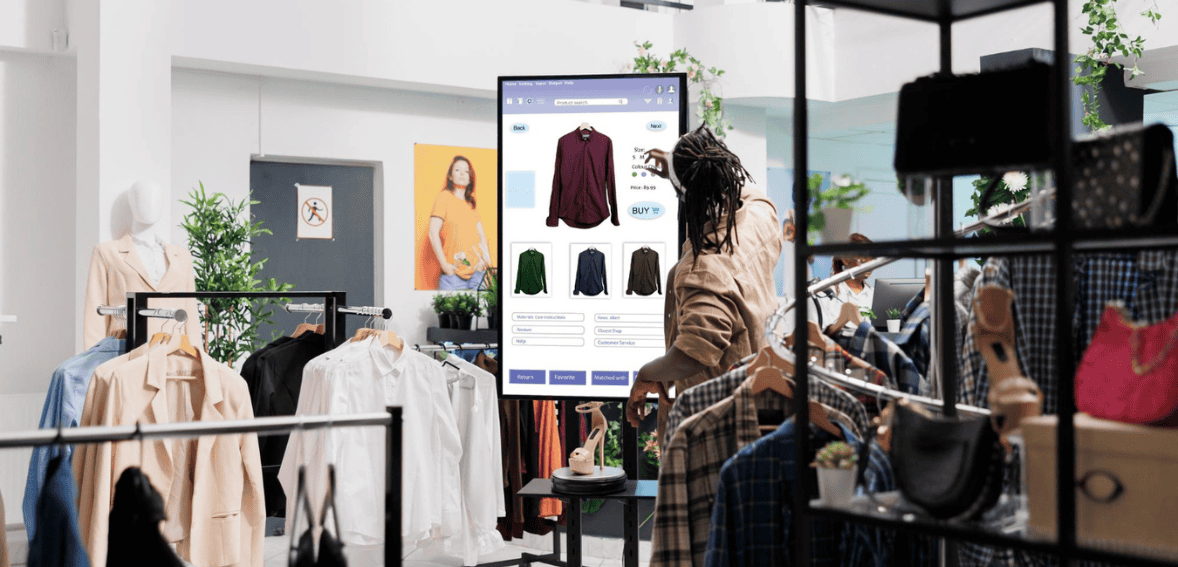
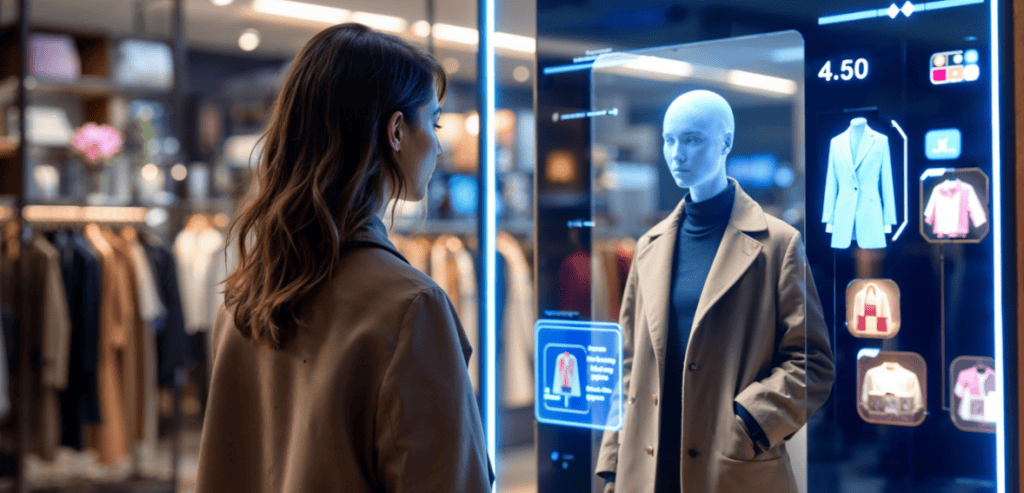
Physical stores are becoming more interactive thanks to digital tools. Touchscreen displays, virtual fitting rooms, and augmented reality applications enhance the in store experience. Retail digital transformation is redefining how customers engage with products beyond static shelves.
Retail technology trends show that immersive technology increases engagement and encourages exploration. For example, virtual mirrors allow customers to see how clothing looks without trying it on physically. A strong digital retail strategy combines sensory experience with digital convenience. This balance represents modern retail innovation where stores blend physical presence with digital enhancement to create memorable shopping experiences.
Workforce Management and Employee Tools
Technology is not only transforming customer interactions but also improving workforce management. Retail digital transformation includes scheduling software that aligns staff availability with predicted demand. Employees can access schedules, request changes, and communicate through dedicated platforms.
Retail technology trends emphasize productivity tools such as handheld devices that provide real time inventory data and customer information. A structured digital retail strategy ensures that staff members are empowered with the tools they need to deliver efficient service. Modern retail innovation supports better internal communication, reduces human error, and boosts morale by simplifying daily tasks. A well supported workforce contributes significantly to overall customer satisfaction.
Ecommerce Integration and Marketplace Expansion
Online marketplaces and direct ecommerce platforms have expanded retail possibilities. Retail digital transformation ensures that physical stores are linked to online sales channels. Customers can explore products on social media, purchase through websites, and collect items from local outlets.
Retail technology trends highlight the importance of seamless synchronization between online listings and store inventory. A comprehensive digital retail strategy aligns marketing, order fulfillment, and customer service across all channels. Modern retail innovation allows smaller retailers to compete globally by leveraging digital platforms. Technology removes geographical barriers, enabling businesses to reach broader audiences while maintaining personal customer relationships.
Data Security and Consumer Trust
As retailers adopt digital tools, data security becomes increasingly important. Retail digital transformation involves collecting sensitive customer information, which requires robust protection measures. Payment systems must comply with security standards, and data storage solutions must prevent unauthorized access.
Retail technology trends reveal growing investment in cybersecurity tools. A thoughtful digital retail strategy includes secure encryption, fraud detection systems, and transparent privacy policies. Modern retail innovation depends not only on efficiency but also on trust. Customers are more likely to engage with brands that demonstrate responsibility in handling their information. Strong data security practices protect both the business and its customers.
Sustainability and Smart Resource Management
Technology also supports sustainability efforts in modern retail innovation. Retail digital transformation includes digital receipts, energy efficient lighting systems, and waste reduction initiatives. Automated inventory systems reduce overproduction, while analytics help retailers forecast demand more accurately.
Retail technology trends show that consumers increasingly value environmentally responsible brands. A balanced digital retail strategy leverages technology to monitor resource usage and minimize environmental impact. Modern retail innovation integrates sustainability into operational practices without compromising profitability. By aligning technology with environmental responsibility, retailers create value beyond sales.
Challenges in Digital Adoption
Although technology offers many benefits, retail digital transformation comes with challenges. Initial investments in systems and training can be significant. Integrating multiple software platforms may require strategic planning and support from specialists.
Retail technology trends evolve rapidly, making it essential for businesses to stay informed. A careful digital retail strategy ensures that new tools align with long term goals rather than following temporary trends. Modern retail innovation succeeds when technology enhances operations without overwhelming staff or complicating customer interactions. Thoughtful implementation and continuous evaluation are key to successful digital evolution.
The Future of Retail in a Digital World
Retail continues to evolve as technology advances. Retail digital transformation will likely deepen as AI, automation, and advanced analytics become more accessible. Retail technology trends may include immersive virtual shopping experiences and predictive customer engagement systems.
A strong digital retail strategy positions businesses to adapt to future changes. Modern retail innovation will continue to bridge the gap between convenience and connection. While physical stores remain important for community and experiential value, technology ensures they operate with efficiency and intelligence. The future retail environment will likely be defined by balance, combining digital power with human warmth.
Conclusion
The retail industry stands at the center of a technological revolution. Retail digital transformation is reshaping operations, customer engagement, and growth strategies across the sector. From smart inventory systems to personalized marketing and integrated payment platforms, retail technology trends are redefining expectations. A thoughtful digital retail strategy empowers businesses to compete effectively in a fast changing environment. Modern retail innovation blends data driven efficiency with meaningful customer experiences. As stores continue to evolve, those that embrace technology while preserving human connection will lead the way in shaping the future of retail.