
Top 10 ways to train associates for omnichannel pickups exchanges and returns
Retail has changed dramatically as customers now shop across multiple channels. They might order a product online, pick it up in a store, return it in a different store, and then ask for a refund using a different channel. Because of this, it is important that store staff are knowledgeable about how to work with an omnichannel retail environment.
If a company does not provide adequate training to its staff, they may find that it is difficult to find a shopper’s order, process a refund, or answer any questions that a shopper may have. Because of this, it is important that a company provides adequate training to its staff regarding omnichannel retail.
Table of Contents
Understanding the Omnichannel Customer Journey

For employees to effectively manage an omnichannel process, they need to know the customer journey. The customer journey is a series of interactions between a customer and a retail organization. The customer journey is not linear in today’s retail scenario. Customers use multiple channels to interact with a retail organization at different stages of the customer journey.
For example, a customer may use a website to look at products, a mobile app to order products, and a counter to collect products. If there is a problem with the products, a customer may use another channel to send them back. Employees should know all of this so that they can solve customer problems at any stage of the customer journey.
Training Associates for Click-and-Collect Orders
The click and collect service enables the customer to purchase products online, then pick them up in a physical store. The associates responsible for handling these services must be trained to understand how to find the products, check the orders, and send them out correctly.
This may involve explaining to them how to use the inventory system to find the location of the product within the store or warehouse. They must also be trained to understand how to check the identity of the customer to avoid sending the wrong product to the wrong person. When the associates are able to handle the click and collect services effectively, this translates to shorter waiting times for the customers.
Creating Efficient Pickup Workflows
For this reason, it is essential to have efficient pickup processes, which can be achieved through training programs. For example, employees should be trained on how to arrange orders in an efficient manner. For example, orders can be arranged according to the pickup time, order number, and customer name.
This will allow employees to easily locate packages as customers wait to pick up their orders. Employees should also be trained on how to communicate with customers during this process. For example, employees should be able to communicate with customers regarding their orders and returns. Simulating this process will help employees get comfortable with it. Efficient processes during this stage are essential to avoid long waiting times.
Training for Returns Management
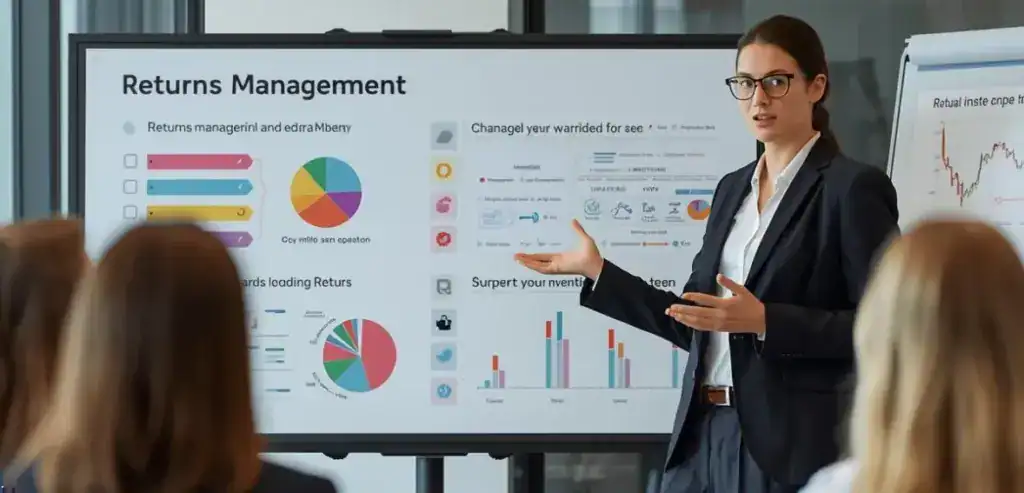
Returns are one of the basic retail operations, and they are more pronounced in omnichannel retailing. Employees should be able to understand how to handle returns from various sales channels while keeping track of inventory levels. They should be trained in how to handle returns and refunds through the POS system.
They should be able to understand how to identify if a product is eligible for return in accordance with company policy. Employees who understand how to handle returns with confidence can address customer complaints efficiently. This provides better customer satisfaction while keeping track of returned goods in the store’s system.
Teaching Associates to Handle Exchanges
Exchanges are also delicate because they involve both returning and replacing something in one transaction. The associates should be trained on how to process exchanges as well as the correct adjustments for the price.
The associates should also be aware of the effects of exchanges on inventory and sales reports. Through proper training on exchange scenarios, associates are able to handle exchanges with confidence. Exchanges are also important because they help prevent long queues at the checkout counter and ensure customers leave the store satisfied.
Communication Skills for Customer Service
Effective communication skills are vital for the associates handling the omnichannel interactions. The customer might need information on their orders, the expected time of delivery, and the process of returning the products, among others.
The associate should be trained on how to communicate effectively and guide the customer on the solutions available to them. Training on communication will ensure the associate can handle the customer’s frustrations and offer the required guidance.
Role-playing can be used as part of the training to ensure the associate can handle the customer in real-life scenarios. Effective communication will ensure the associate remains calm and poised, even during the busiest of times. This will ensure the associate has positive relationships with the customers, which will translate to more sales.
Using Technology and Order Management Systems
Omnichannel operations also require significant investment in technology, such as order management and inventory systems. Employees should also learn how to effectively work with these technologies.
For example, they should know how to search for and update orders and confirm whether there is enough inventory in stock. Employees should also know how technology works in connecting online and in-store operations. Knowing this information would help associates answer customer queries in a timely fashion.
Technology training also requires that employees get to practice using this technology to gain confidence in using it. When associates are knowledgeable about the technology that is being used in omnichannel operations, they will be able to handle order pickups and exchanges in a timely fashion and reduce errors.
Handling High-Volume Return Periods
Some periods of the year may be characterized by a large number of return and exchange activities. Training programs should be implemented to prepare associates during such periods.
Employees should be made aware of various ways of organizing returned products, handling refunds effectively, and keeping track of inventory. Such procedures would avoid confusion during peak periods when many consumers visit stores at once. Another strategy would be to allocate duties to each employee.
For example, an employee may be responsible for handling return products, handling pickups, or providing support to consumers. When associates are well prepared to face peak periods characterized by return and exchange activities, stores operate effectively during such periods.
Standardizing Omnichannel Service Procedures
In retail operations, consistency is a critical aspect of omnichannel retailing. This is because customers expect to receive the same level of service whether they are shopping online or in-store. The training programs should, therefore, include a way of standardizing processes for handling pickups, returns, and exchanges in all retail stores.
This way, all employees are able to follow a series of steps in handling transactions. This helps in eliminating any confusion and ensures that all customers receive a consistent level of service regardless of which employee they are working with. When employees are able to follow a series of steps in handling transactions, retail operations are made much simpler.
Continuous Training and Skill Development

Omnichannel retail systems and technologies are constantly changing. Hence, it is not enough to provide training to employees in the form of initial training sessions. Continuous training programs are also important to keep employees abreast of recent developments in processes, technologies, and customer service skills.
It is also important that managers of retail businesses encourage their employees to ask questions and provide feedback regarding improvements in processes and operations. Continuous training is important to ensure that employees are confident in handling omnichannel interactions.
Creating a Customer-Centered Service Culture
Ultimately, training programs should be focused on creating a customer-centric service culture. Employees should be made to realize that all aspects of an omnichannel process are implemented to provide convenience to consumers. Whether it is related to pick up orders, exchanges, or returns, the idea is to provide a good customer experience.
Retailers should be able to motivate employees to provide a good customer experience by telling them that when they focus on customer satisfaction, it is going to help build brand loyalty. Employees who focus on customer satisfaction motivate themselves to provide good service to consumers beyond what is required of them.
Conclusion
The training of associates on handling omnichannel pickups, exchanges, and returns is critical for the success of the retail industry. As the customer makes their way through the shopping journey, moving easily and seamlessly between online and offline shopping, the employees in the retail stores must be trained to handle the entire process.
This involves training the employees on how to effectively handle the returns, how to effectively communicate with the customers, and how to effectively use technology. This training helps retailers ensure the efficient operation of the retail industry, which in the end results in the success of the retail industry.
FAQs
What is Omnichannel retail training?
Store employees who receive omnichannel retail training are more equipped to handle online orders, in-store pickups, returns, and exchanges across a variety of sales channels.
What makes click-and-collect training crucial for retail employees?
Employees who receive the right training are guaranteed to be able to find orders fast, confirm customer information, and finish pickups rapidly.
How is customer service enhanced by omnichannel training?
It enables employees to confidently respond to consumer demands and offer dependable assistance throughout both online and in-person engagements.
What knowledge should retail employees acquire to handle exchanges and returns?
They should be knowledgeable about inventory updates, POS systems, return rules, and customer service strategies.
How frequently should omnichannel training be updated?
To incorporate new systems, technologies, and operating procedures, retailers need to regularly update their training materials.