
Cashless and Contactless Payments: The Future of Retail Transactions
The act of paying for something is so embedded in daily life that most people rarely think about it until the moment something about it changes. For centuries, the exchange involved physical currency. Then cards arrived and slowly became dominant. Now the card itself is becoming optional, replaced by a phone, a watch, or simply a face. The shift to cashless and contactless payment systems is not a distant development on the technology horizon. It is happening across retail environments right now, at different speeds in different markets, but with a consistent directional momentum that makes the outcome of widespread adoption look increasingly inevitable rather than merely probable.
The concept of contactless payment retail is much more than just the benefit of being able to make transactions quickly. This involves an altogether different paradigm shift in terms of commerce, data, finances, and identity that permeates all aspects of retail activity. In order to comprehend this shift, it is necessary to understand not only the underlying technologies but also the reasons for its quick adoption, the special features provided by the latest digital payment systems, and the new trends created in retailing due to cashless stores. It is important to identify the areas where there are real issues in this process and learn from the lessons of those retailers and customers that approach this development wisely.
The Acceleration of Contactless Adoption
The story of contactless payment adoption has not followed a smooth upward curve. NFC retail payments technology existed in usable commercial form for years before adoption crossed the threshold from early-mover novelty to mainstream behavior. The technology was available, the terminals were being gradually deployed, and the card networks had their contactless infrastructure in place, but the behavioral inertia of paying by card swipe or PIN entry was proving difficult to overcome in many markets. What changed the adoption curve dramatically was a combination of factors that arrived in rapid succession rather than gradually.
Hygiene concerns that made the idea of handling cash or touching shared surfaces at payment terminals genuinely unappealing created an immediate practical motivation for contactless payment that no amount of marketing had been able to manufacture. Merchants who had been slow to deploy NFC-capable terminals accelerated their hardware upgrades when they recognized that contactless capability had shifted from a differentiator to a customer expectation.
The card companies reacted to the situation by increasing contactless limits, overcoming another of the real-world obstacles that had limited contactless to only very small transactions. In addition, the digital wallet apps, which had been quietly building their audiences for some time, realized that their time had come as people who had signed up for Apple Pay or Google Pay and not used it very often realized just how easy it was to use in practice. Together, these things resulted in a behavioral change that proved remarkably resilient because, once consumers had tasted the convenience of contactless payments, they generally did not go back to their old ways when the reason for making the change became less urgent.
How NFC Technology Works in Retail
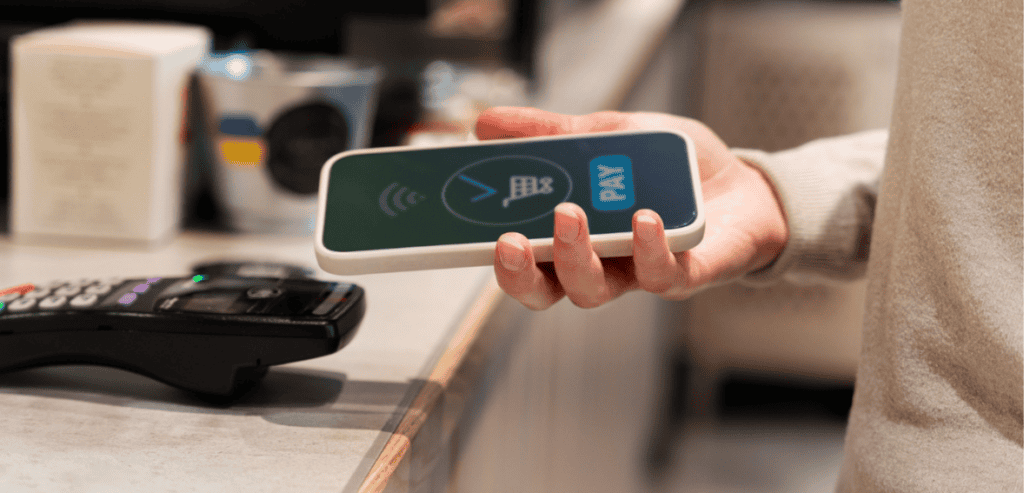
Understanding NFC retail payments at a basic technical level helps demystify the transaction experience and explains why the technology is so well suited to the retail payment context. NFC stands for near-field communication, and it is a short-range wireless communication protocol that allows two NFC-enabled devices to exchange data when they are brought within a few centimeters of each other. When a customer holds a contactless card, a smartphone with a digital wallet, or an NFC-enabled wearable near a payment terminal, the two devices communicate for a fraction of a second, exchanging a payment token that authorizes the transaction.
This process consumes less time than even a sentence requires to be uttered, hence creating a sense of effortless payment compared to other types. One feature that defines NFC payment system security measures is tokenization, whereby the actual credit card number does not get passed during the transaction. In its place, a dynamic authentication token, unique to each transaction, gets generated, and this means that any captured information during interception is useless since there would be no way of using it to create any form of fraud.
This is among the factors that have seen NFC payments become not only equally but also much more secure than chip card and magnetic stripe transactions. Additional layers of security in digital wallets come from the use of device authentication, meaning that the payment device has to authenticate the identity of the user via biometrics like fingerprints or a face scan before allowing payment processing.
Digital Wallets and the Ecosystem of Payments
The digital payment systems landscape is considerably richer than a simple replacement of plastic cards with phone-based equivalents. Digital wallets like Apple Pay, Google Pay, and Samsung Pay are the most familiar expressions of this ecosystem, but they exist within a broader payment infrastructure that includes proprietary retailer apps, peer-to-peer payment platforms, buy now pay later integrations, loyalty program connectivity, and increasingly cryptocurrency payment options, all of which are accessible through mobile devices and all of which are competing for a place in the consumer’s daily payment behavior.
The benefits of digital wallets are not limited to fast transactions alone. For instance, when a user makes a payment using his/her digital wallet, any changes made on the cards held within the wallet, such as the reissue of a card, will automatically sync with all the accounts and service providers that were utilizing the old card details. Moreover, the transaction history provided by digital wallet applications helps consumers keep better records of their purchases in comparison to the card statement from a traditional card.
With the integration of the loyalty programs into the digital payment system, users will not have to worry about using another loyalty card when making payments since the program can work seamlessly alongside the digital payment method. Retailers who operate in contactless payment environments with digital payment systems, and who have integrated the loyalty programs into these systems have reported increased loyalty program memberships than those retailers operating loyalty programs in separate channels from their payment services.
Cashless Store Technology and Retail Operations
The operational implications of cashless store technology extend well beyond the payment terminal and affect virtually every aspect of how a retail environment functions. Cash handling is one of the most consistently underestimated costs in traditional retail, consuming staff time in counting, reconciling, transporting, and securing physical currency that adds up to meaningful labor cost and operational complexity across every shift. Eliminating or substantially reducing cash handling through cashless store technology returns these hours to customer service and operational functions while reducing the security risk and insurance cost associated with keeping cash on the premises.
Checkout speed is the most immediately visible operational benefit of cashless store technology, but the cumulative throughput improvements that faster transactions enabled across a busy retail day represent genuine capacity gains that translate into revenue potential.
A payment process which will only take four seconds as opposed to thirty seconds per transaction translates into serving many more customers per hour during rush hours, and hence reduces queues, improves customer experience, and allows the business to handle more throughput with the same number of staff members.
The data aspect of cashless store operations cannot be underestimated in terms of the value that the technology offers to the retail operator. With every single cashless transaction creating an electronic trail, the integration of inventory and customer relationship management systems with the data generated from such cashless transactions gives real-time insight as to what is being bought, by whom, and how well the operation is doing in terms of anything relevant to the operator.
The Transformation of the Physical Checkout
One of the most dramatic expressions of cashless store technology is the emergence of frictionless checkout formats that are eliminating the traditional checkout counter entirely from certain retail environments. Amazon Go stores, which use computer vision and sensor fusion to track what customers pick up and automatically charge their accounts when they walk out, represent the most technologically intensive version of this transformation. Customers enter the store by scanning a QR code, pick items from shelves without any scanning or payment interaction, and leave when they are done, with a digital receipt arriving on their phone shortly after departure.
The appeal of this format from a customer experience perspective is profound: the entire friction of the checkout process, the queuing, the scanning, the payment interaction, the receipt handling, is simply removed. The operational model that supports it is complex and currently expensive relative to traditional checkout, but the technology is maturing and costs are declining in ways that suggest broader deployment across retail formats beyond the early-adopter environments where it has been demonstrated to date.
More immediately accessible versions of frictionless checkout include scan-and-go technology that allows customers to scan items as they shop using their smartphone and then pay through the app before leaving without visiting a traditional checkout lane, and smart cart technology that incorporates scanning capability into the shopping cart itself. These approaches represent intermediate steps toward the fully frictionless checkout vision that are achievable with current technology and infrastructure without the extensive sensor deployment that Amazon Go-style stores require.
Payment Inclusion and the Cashless Access Question
The transition to cashless and contactless payment systems raises genuine questions about access and inclusion that honest accounts of this transformation need to address rather than gloss over. Not everyone has a bank account, a credit card, or a smartphone, and the populations most likely to be unbanked or underbanked, including lower-income households, elderly individuals, recent immigrants, and people in specific rural or underserved communities, are the same populations that face the greatest barriers to participating in cashless retail environments.
A retail landscape that effectively requires digital payment capability as a precondition for basic commerce creates exclusion for these groups that have both ethical and practical dimensions. The ethical dimension is that essential goods and services should be accessible to everyone regardless of their banking status or technology access. The practical dimension is that retailers who eliminate cash acceptance are making a deliberate choice about which customers their business is designed to serve, and that choice has competitive and reputational implications alongside its social ones.
Several jurisdictions have already addressed this concern through legislation that prohibits merchants from refusing cash, recognizing legal tender as a right that cannot be effectively eliminated through private retail policy.
NFC retail payments and digital payment systems proponents respond to these concerns by pointing to the accessibility improvements that digital financial services have enabled for previously underbanked populations, through prepaid debit cards with contactless capability, mobile banking accounts accessible without a traditional bank relationship, and government benefit programs that deliver funds digitally rather than in physical form. The genuine path forward involves expanding access to digital financial tools alongside the adoption of cashless retail technology, rather than treating access concerns as reasons to slow the technology transition or, alternatively, as problems that will simply resolve themselves.
Security, Fraud, and Consumer Protection in Digital Payments
The security landscape of digital payment systems is one of the most commonly misunderstood dimensions of the cashless payment transition, with consumer perceptions of risk often diverging significantly from the actual risk profile of different payment methods. The instinctive concern that wireless payment technology creates new opportunities for fraud is not entirely unfounded, but the practical reality is that the security architecture of modern contactless and digital wallet payments is significantly more robust than the magnetic stripe and PIN-based systems that preceded them.
Tokenization, biometric authentication, and real-time fraud monitoring together create a payment security infrastructure that is genuinely difficult to compromise in the ways that have historically driven payment fraud. The fraud risks that do exist in cashless payment environments tend to be concentrated at the account level rather than the transaction level, meaning that attackers target the process of enrolling fraudulent credentials in a digital wallet or compromising the account credentials that secure a payment app rather than intercepting individual NFC transactions.
Consumer protection frameworks for digital payments, including chargeback rights for fraudulent transactions and zero-liability policies from card networks, provide financial protections that cash transactions do not offer, which means that a consumer who experiences fraud on a digital payment transaction has recourse that a consumer who loses cash does not. The overall fraud picture in digital and contactless payment systems is more favorable for consumers than the intuitive assessment of “wireless equals risky” suggests, though the responsibility for maintaining account security through strong passwords, biometric authentication, and awareness of phishing attempts remains with the individual consumer.
Retailers Navigating the Transition
For retailers in the process of transitioning to or expanding their contactless payment capabilities, the practical decisions about technology, timing, and communication with customers require more nuance than simply upgrading to a new payment terminal. The hardware investment in NFC-capable terminals is the most visible component of the transition but is often the most straightforward, as modern payment terminals from established processors are typically NFC-capable as standard and the cost of hardware has declined significantly.
The more complex decisions involve how to communicate with customers about new payment options, how to train staff to facilitate contactless transactions and to assist customers who are unfamiliar with the process, and how to balance the operational efficiencies of cashless store technology with any continuing obligation to serve cash-paying customers.
Integration of contactless payment infrastructure with loyalty programs, customer relationship management systems, and inventory management platforms is where the full operational value of the transition is realized, and this integration work typically requires more planning and more organizational change management than the hardware deployment itself. Retailers that approach the cashless transition as an opportunity to improve their overall operational data infrastructure, rather than simply as a payment method upgrade, consistently extract more value from the investment because they are using the data generated by digital transactions to improve decisions across the business rather than simply recording the same financial information in a digital rather than paper format.
The Global Picture and Divergent Paths
The adoption of cashless and contactless payment technology is not uniform globally, and examining where different markets are in this transition reveals both the diversity of paths to a cashless future and the factors that determine the pace and character of adoption in specific contexts. China and the Scandinavian countries represent the closest existing approximations of fully cashless consumer economies, each having reached that position through different routes.
China’s transition was driven by mobile payment super apps that built payment functionality into platforms that hundreds of millions of consumers were already using for messaging and commerce, creating a network effect that made mobile payment the default option for an enormous share of transactions before traditional banking and card infrastructure had an opportunity to establish the dominant position it holds in Western markets.
The Scandinavian experience reflects a different trajectory where high banking inclusion, strong consumer trust in financial institutions, and government support for digital financial infrastructure combined to make electronic payment the cultural norm rather than a technology adoption challenge. Markets with lower banking inclusion rates, older demographic profiles, or specific cultural relationships with cash as a store of value and medium of exchange are following slower and more complex paths that reflect the genuine diversity of contexts in which cashless payment technology is being adopted.
The global trajectory is clearly toward broader cashless adoption, but the specific timing, the dominant technology formats, and the policy frameworks governing the transition vary enough between markets that generalizations from one context to another should be made carefully.
Conclusion
Cashless and contactless payment technology is reshaping retail transactions in ways that go well beyond the surface experience of tapping a phone to pay for a coffee. Contactless payment retail environments are faster, more data-rich, more operationally efficient, and more securely authenticated than the cash and magnetic stripe environments they are replacing. Digital payment systems provide consumers with financial tools, record-keeping capabilities, and fraud protections that physical currency and traditional card systems could not offer. NFC retail payments have made the transaction experience genuinely frictionless in ways that are demonstrably affecting consumer behavior and retail economics.
Cashless store technology is enabling new retail formats and operational capabilities that the physical and temporal constraints of cash-based commerce could not support. The genuine challenges of this transition, including the access and inclusion concerns for populations without digital payment tools and the data privacy questions raised by comprehensive transaction records, are important and deserve serious engagement rather than dismissal.
The future of retail transactions is clearly digital, but how we navigate the transition matters as much as the destination, and the retailers, policymakers, and technology providers who take seriously both the benefits and the complexities of this transformation will shape a payment landscape that is not just more efficient but genuinely more equitable and more trustworthy.