
Managing Retail Shrink: Modern Strategies to Combat Organized Retail Crime
Retail shrink is no longer just a store-level headache that shows up during inventory counts. It has become a broader operational, financial, and customer experience issue that touches merchandising, staffing, replenishment, fulfillment, reporting, and long-term profitability.
When shrink grows, it does not stay contained in one aisle or one location. It spreads into out-of-stocks, margin pressure, misplaced labor, frustrated shoppers, and weaker decision-making.
That is why retail shrink management now requires more than cameras at the front door or a reactive loss prevention program. Retail leaders need a connected strategy that blends store operations, inventory discipline, organized retail crime prevention, employee awareness, data analysis, and customer-friendly security design.
The goal is not only to catch theft after it happens. The goal is to reduce avoidable loss, protect the business, and keep the store easy and pleasant to shop.
Organized retail crime has made this challenge more urgent. Unlike casual shoplifting, organized groups often target specific products, exploit weak controls, resell stolen goods quickly, and test stores repeatedly until they find a pattern they can use.
That means retailers need smarter systems, faster reporting, better cross-location visibility, and stronger coordination between store teams and leadership.
This guide explains what shrink is, why it matters, how organized retail crime contributes to it, and what modern strategies can help reduce losses without damaging the customer experience. It is designed for store owners, retail leaders, operations managers, and loss prevention teams who want practical, workable steps they can put into action.
What Retail Shrink Really Means
Retail shrink is the gap between the inventory a retailer should have on hand and the inventory that is actually available to sell. In simple terms, it is inventory loss.
That loss may come from theft, damage, administrative mistakes, vendor issues, or process failures. It is often measured by comparing book inventory to physical counts and translating the variance into dollars or as a percentage of sales.
For many retailers, shrinkage in retail stores gets discussed only during annual inventory or after a major incident. That is one reason it can become so expensive.
Shrink often builds gradually through many small failures: a missed receiving discrepancy, repeated self-checkout abuse, damaged goods not processed correctly, fake returns, poor transfer controls, or internal theft that goes undetected for too long. Each one may seem minor alone, but together they can quietly drain profit.
Retail shrink management matters because shrink does more than reduce margin. It weakens inventory accuracy. Once stock data becomes unreliable, replenishment gets distorted, forecasting suffers, store teams waste time searching for products, and customers lose confidence when items shown as available cannot be found.
Articles on inventory visibility, POS systems, and omnichannel operations regularly point to the same reality: when inventory data is weak, operational decisions suffer across the business.
Another important point is that shrink is not limited to physical stores. Omnichannel retailers can experience inventory loss through fulfillment errors, return fraud, order manipulation, mis-picks, and weak handoff controls between stores, stockrooms, and shipping workflows. That makes inventory shrinkage control a company-wide issue, not just a front-of-house issue.
The Main Causes of Shrink in Retail Stores
The most common causes of shrink usually fall into a handful of categories. External theft is the most visible, but it is far from the only one. Administrative errors are often underestimated because they do not look dramatic, yet a steady stream of receiving mistakes, ticketing errors, inaccurate markdowns, and misapplied adjustments can create meaningful losses over time.
Internal theft is another major contributor. This can include sweethearting at the register, unauthorized discounts, fake refunds, cash skimming, time theft tied to poor controls, or direct merchandise theft. Many retailers focus heavily on external threats while overlooking the fact that weak internal controls can create equally serious losses.
Operational breakdowns also matter. Poor stockroom organization, inconsistent cycle counts, unverified transfers, open access to high-risk inventory, and unclear return handling procedures all increase risk. Add vendor fraud, shipment shortages, and damaged goods processing mistakes, and shrink becomes a multilayered problem.
The table below shows how common shrink drivers affect day-to-day retail performance:
| Shrink cause | What it looks like in practice | Business impact |
| External theft | Shoplifting, grab-and-run incidents, self-checkout abuse, fake returns | Lost inventory, customer disruption, higher security costs |
| Organized retail crime | Coordinated groups targeting high-value or easily resold items | Repeated losses, staff safety concerns, cross-location exposure |
| Internal theft | Sweethearting, cash theft, unauthorized discounts, false refunds | Margin erosion, trust issues, compliance risk |
| Administrative error | Receiving mistakes, mis-scans, pricing errors, bad adjustments | Poor inventory accuracy, false stock levels, flawed reporting |
| Vendor or supply chain loss | Short shipments, billing discrepancies, diversion | Inventory mismatch, delayed replenishment, extra investigation time |
| Damage and process loss | Breakage, spoilage, poor handling, missing documentation | Unsellable goods, accounting confusion, waste |
A strong shrink reduction program recognizes that not all loss looks like crime. Some of the most effective reduce retail shrinkage strategies focus on process control because cleaner operations reduce both accidental loss and deliberate abuse.
Why Organized Retail Crime Is Different From Ordinary Shoplifting

Ordinary shoplifting is often opportunistic. A person sees an opening, takes a product, and leaves. Organized retail crime is more deliberate. It is coordinated, repeatable, and often driven by resale.
Groups may work in teams, assign roles, target specific categories, use distraction tactics, exploit return policies, or move across multiple stores and markets. Their activity is not random. It is planned.
This difference matters because the right response changes with the threat. A store approach that may reduce casual theft will not necessarily stop a group that studies employee routines, understands blind spots, watches delivery schedules, or uses digital channels to resell stolen merchandise quickly.
Organized retail crime prevention requires better intelligence, tighter incident reporting, and stronger coordination across stores and departments.
Many ORC groups focus on merchandise with three characteristics: it is easy to carry, easy to resell, and difficult to trace. Think small electronics, branded beauty products, over-the-counter health products, premium apparel accessories, razors, fragrances, baby formula, and other fast-moving items.
Groups may also exploit self-checkout, curbside pickup, BOPIS workflows, and return counters, especially where policy enforcement is inconsistent.
The impact reaches beyond product loss. ORC incidents can create safety concerns for associates, push frontline teams into reactive mode, and change the shopping environment in ways customers notice. That is why modern retail security strategies must reduce risk without turning the store into a hostile experience.
Warning Signs of Organized Retail Crime
Store teams often notice ORC patterns before leadership sees them in reports, but only if they know what to watch for.
Common warning signs include repeat visits from the same people or vehicles, groups entering together and splitting up, distraction tactics near high-risk categories, unusually fast shelf-clearing of targeted items, and return activity that does not fit normal customer behavior.
Another signal is product concentration. If losses cluster around specific brands, pack sizes, or SKUs that also have strong resale value, that deserves attention. The same is true when multiple stores report similar incidents involving the same item families. Cross-location patterning is a major clue in organized retail crime cases.
Watch for abuse around service points too. A coordinated group may test self-checkout controls, pressure cashiers with speed and confusion, attempt no-receipt returns in waves, or exploit gaps between online and in-store processes.
In omnichannel settings, fake pickup claims, manipulated order timing, or excessive refund requests can all point to a larger pattern.
Here is a practical warning-sign checklist:
- Frequent theft involving the same high-resale products
- Multiple suspects working in coordinated roles
- Shelf sweeping or basket loading followed by fast exits
- Incidents timed during shift changes or peak traffic
- Repeated attempts at no-receipt or high-value returns
- Similar loss patterns across nearby stores
- Suspicious interest in stockroom doors, receiving areas, or locked cases
- Online order abuse tied to certain names, addresses, devices, or payment methods
These signs do not prove organized activity on their own. But together, they give loss prevention for retailers a stronger base for action, especially when paired with clean reporting and video review.
Why Retail Shrink Management Matters to Profitability and Trust

Shrink hits profit directly, but that is only the starting point. Retailers live on thin margins in many categories, which means a relatively small amount of inventory loss can erase a much larger amount of sales effort. When a store has to sell more just to make up for preventable loss, the business ends up working harder for less return.
The damage does not stop at the income statement. Shrink also undermines inventory accuracy, and inaccurate inventory affects almost every operational decision. If the system says an item is in stock but the shelf is empty, replenishment may not trigger in time.
If the store thinks it has enough units for online pickup orders, but the product is missing, the result is cancellations, substitutions, and disappointed customers. Retail operations and omnichannel articles consistently emphasize that real-time inventory integrity is central to service reliability.
Staffing is affected too. Store teams spend time searching for missing products, investigating discrepancies, reworking counts, processing claims, and dealing with frustrated shoppers. Managers then lose time that should have gone to coaching, merchandising, selling, or labor planning. In this way, shrink creates hidden labor costs in addition to merchandise loss.
Customer trust is another major factor. Shoppers may not use the term “shrink,” but they experience its effects. They notice empty pegs, locked cases, long wait times for assistance, unavailable pickup orders, and confusing return experiences.
If security responses become too blunt, they may also feel distrusted or inconvenienced. Strong retail shrink management protects the customer experience by keeping product available while making the store feel safe, organized, and easy to navigate.
How Shrink Disrupts Inventory Accuracy, Margins, and Store Performance
Inventory accuracy is the foundation of a well-run retail operation. When shrink is high, data becomes less trustworthy. That can lead to phantom inventory, false replenishment signals, poor planogram execution, and delayed transfers. In a multi-store operation, one location’s inaccuracy can even distort network-level decisions about where to allocate a product.
Margins take another hit through indirect costs. High-shrink categories may require more labor, added security fixtures, more frequent counts, and tighter handling procedures. Those steps are often necessary, but they increase operating complexity. If retailers do not measure the total cost of loss response, they may solve one problem while creating another.
Store performance also suffers because shrink tends to cluster in places where execution is already strained. A poorly recovered section, an understaffed fitting room zone, weak receiving controls, inconsistent self-checkout oversight, or a cluttered stockroom can all become both a symptom and a cause of higher shrinkage. That is why effective shrink reduction methods often improve store discipline more broadly.
The strongest retailers do not separate shrink from store performance. They tie it to in-stock rates, labor use, service levels, return integrity, and category profitability. This broader view turns inventory loss prevention into a management practice rather than a one-time project.
Modern Strategies to Combat Organized Retail Crime
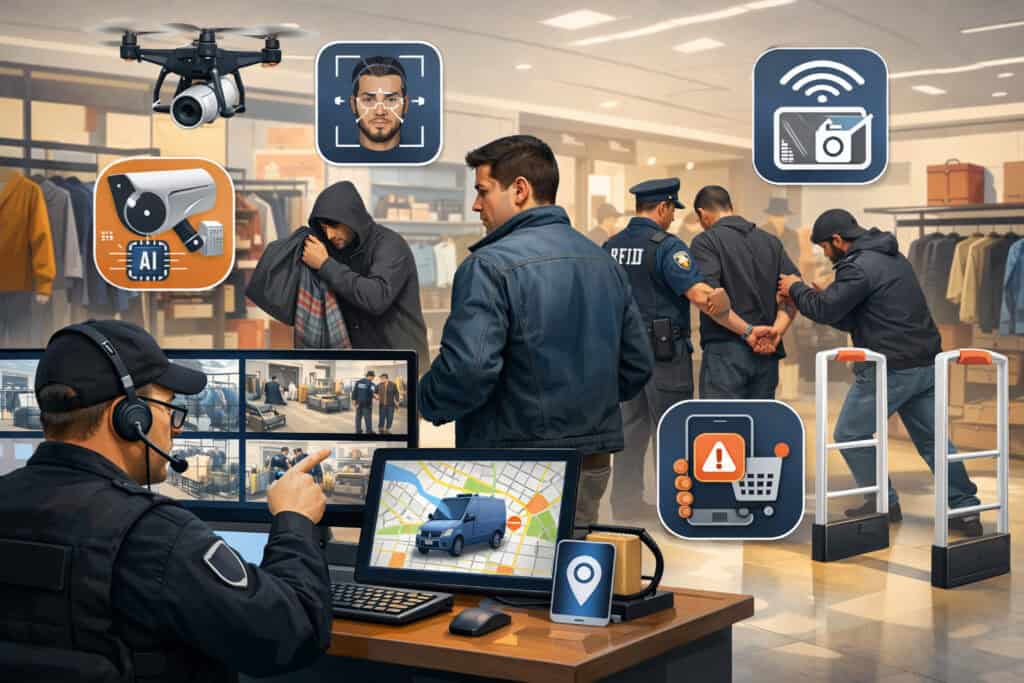
The most effective response to organized retail crime is layered. There is no single device, policy, or team that solves it alone. Retailers need a mix of prevention, deterrence, detection, documentation, and coordinated follow-up. The best programs also recognize that ORC groups adapt quickly, so controls must be reviewed and refined regularly.
A modern approach begins with risk segmentation. Not every store has the same threat profile, and not every product deserves the same control level. High-risk items, repeat-loss locations, and vulnerable workflows should get deeper attention.
Low-risk categories should not be overburdened with heavy-handed measures that create unnecessary shopper friction.
Technology plays an important role, but it works best when paired with process discipline. CCTV, EAS, RFID, POS exception reporting, access controls, and digital case alerts can all help, but only if teams review the data, investigate patterns, and act consistently.
Retail systems and analytics tools are most useful when they connect sales, inventory, user permissions, and reporting into one view.
Organized retail crime prevention also depends on faster communication. A suspicious pattern in one store should not stay trapped in one manager’s notes.
Cross-location reporting, shared incident standards, and centralized review help retailers connect the dots sooner. The same is true for coordination between store operations, loss prevention, merchandising, eCommerce, and field leadership.
Physical Store Tactics That Actually Work
In-store prevention starts with visibility and control. High-risk merchandise should be easy for staff to observe and harder to remove in volume. That does not always mean locking everything up.
It may mean adjusting shelf placement, reducing facings, moving product closer to staffed areas, using tethering, adding smart fixtures, or shifting premium inventory into assisted-selling zones.
Staff presence matters more than many retailers realize. Well-positioned associates who greet customers, recover merchandise quickly, and remain visible in target categories can deter both opportunistic theft and coordinated activity. Criminal groups often look for low-attention environments where they can move fast without interruption.
Fitting rooms, self-checkout, endcaps, side exits, and promotional displays deserve special attention because they often create blind spots or fast-removal opportunities. Product protection should be matched to item value, concealability, and resale appeal.
For example, a retailer may use an open display for testers or lower-risk variants while securing the highest-risk versions nearby.
Effective store-level retail loss prevention techniques often include:
- Smart placement of high-risk categories
- Controlled number of sellable units on the floor
- Frequent recovery in target zones
- Clear sightlines and reduced visual barriers
- Associate engagement at entry and high-risk departments
- Exit awareness without aggressive confrontation
- Fitting room item counts where appropriate
- Self-checkout staffing based on transaction risk, not just lane count
These approaches work best when they are reviewed regularly. ORC groups notice patterns quickly. If a control becomes predictable, it becomes easier to work around.
Omnichannel Controls for Returns, Pickup, and Fulfillment
Shrink does not stop at the store door. Omnichannel operations create new opportunities for fraud and loss if controls are weak or disconnected. BOPIS, curbside pickup, ship-from-store, endless aisle, and cross-channel returns all improve convenience, but each one adds handoff points where mistakes or abuse can occur.
Return fraud is a major risk area. Retailers need consistent rules for receipt verification, customer identification where appropriate, item condition checks, refund timing, and exception review.
A policy that looks customer-friendly on paper can become a serious loss driver if stores apply it inconsistently or if systems cannot flag suspicious patterns across locations.
Pickup workflows also need discipline. Associates should verify order identity carefully, document substitutions, and confirm status changes in real time.
Otherwise, retailers may face “never received” claims, duplicate handoffs, or manipulated pickup timing. Store-fulfilled orders require scan integrity, secure staging, and clear accountability so merchandise does not disappear between shelf, packing station, and customer handoff.
Retailers that are strengthening omnichannel inventory practices often focus on real-time stock visibility, connected order data, and standardized workflow steps because accuracy depends on system discipline as much as physical controls.
Inventory Shrinkage Control Through Audits, Counts, and Analytics
Strong inventory shrinkage control starts with knowing where the variance begins. Annual physical inventory still matters, but it is not enough on its own. By the time a retailer discovers a major shrink problem once a year, the root cause may be months old, the evidence may be incomplete, and the operational damage may already be widespread.
That is why cycle counting is so valuable. Smaller, more frequent counts help retailers spot discrepancies earlier, especially in high-risk categories, unstable locations, and fast-moving SKUs. Counts should not be random busywork. They should be guided by risk: item value, past loss history, return exposure, transfer volume, and count volatility.
Exception reporting is another essential tool. Instead of reviewing every transaction equally, retailers should focus on unusual activity: repeated voids, no-sale drawer opens, excessive post-voids, high refund volume, unusual markdown behavior, repeated inventory adjustments, or abnormal quantity scans.
Cloud-based systems and smart POS reporting can make these patterns easier to detect by linking user actions, transaction history, and inventory movement.
Analytics matter most when they support action. If reports are too broad, too delayed, or too disconnected from store reality, they will not reduce shrink. Retailers need simple, repeatable ways to identify where loss is happening, who needs to investigate, and what action is expected next.
Using Cycle Counts and Exception Reports to Find Hidden Loss
Cycle counts help uncover shrink patterns that broad financial reporting may miss. For example, if one store repeatedly shows shortages in a narrow group of beauty items, that may point to a shelf-sweeping issue or a receiving process problem.
If another store shows erratic variance after weekend promotions, the issue may be recovery discipline, ticketing confusion, or understaffed supervision.
The most useful cycle count programs define who counts, when counts happen, how discrepancies are escalated, and how recounts are handled. They also separate ownership from verification when possible. If the same person both controls the area and resolves every discrepancy without review, the process becomes weak.
Exception reports add another layer by showing behavioral patterns. A single high-dollar refund may not look alarming. Fifty small refunds tied to the same employee, register, or time block can tell a very different story. The same is true for repeated discount overrides, frequent training mode use, suspicious returns, or adjustment spikes after closing.
Retailers looking to strengthen inventory loss prevention should combine three views:
- Item view: Which SKUs or categories keep showing variance?
- Location view: Which stores, departments, or zones are unstable?
- Behavior view: Which transactions, users, or workflows are unusual?
When those three views align, root causes become much easier to identify.
The Role of RFID, EAS, POS Monitoring, and CCTV
Retail technology can meaningfully improve retail shrink management, but only when it is used as part of a system rather than as a collection of isolated tools. RFID can improve item-level visibility, accelerate counts, and reveal inventory movement with more speed than manual methods.
EAS can deter theft and signal unpaid exits. CCTV helps with review, evidence, and pattern confirmation. POS monitoring exposes exceptions tied to employee activity and register behavior.
Each tool solves a different part of the problem. RFID is especially helpful where item-level count speed matters and where stock accuracy is a core operational priority. EAS is useful for deterrence and point-of-exit alerting.
CCTV is strongest when camera placement matches known risk zones and when footage can be reviewed efficiently. POS exception monitoring is often one of the best tools for uncovering internal abuse or policy manipulation because it highlights unusual behavior instead of waiting for a confession.
Retailers should be realistic about what technology can and cannot do. Cameras do not prevent theft by themselves. RFID will not fix sloppy receiving. EAS tags will not solve fraudulent returns. But when tools are connected to store processes, trained teams, and clear response rules, they become powerful.
For many retailers, the biggest missed opportunity is not buying technology. It is failing to use the data already available from current systems. Real-time reporting, centralized dashboards, and connected retail platforms make it easier to spot anomalies and respond faster than older disconnected processes.
Store Layout, Merchandising, and Product Placement Strategies
Store design can either reduce shrink or quietly invite it. Layout choices affect sightlines, associate coverage, product access, dwell time, and how easy it is for bad actors to exploit blind spots. A good merchandising plan should support sales and product discovery, but it also needs to consider concealability, speed of removal, and employee visibility.
High-risk items should not automatically be pushed to the very back of the store just because they are small. That often creates the wrong environment: less visibility, slower staff response, and easier concealment.
In many cases, the better move is to place targeted products in active zones where staff presence is stronger. Assisted-selling layouts can be especially effective for premium or repeat-targeted categories.
Locked displays are sometimes necessary, but they should be used strategically. If too many products are locked up, the store can feel inconvenient and hostile. That can reduce conversion and frustrate honest shoppers.
A more balanced approach is to secure only the highest-risk SKUs, use visible call buttons or mobile associate response tools, and make the path to help quick and clear.
Product density matters too. Deep shelves of high-resale products make sweep theft easier. Retailers can lower risk by reducing floor quantities, increasing replenishment cadence, and using empty-box or display-only strategies in select categories.
These are practical retail security strategies because they reduce potential loss per incident without eliminating customer access completely.
Designing for Visibility Without Hurting the Shopping Experience
A store should feel open, easy to shop, and well supported. Security design works best when it blends into the experience rather than shouting at the customer. Strong sightlines, lower fixture heights in risk zones, well-lit categories, cleaner endcaps, and active associate positioning can all reduce shrink without making customers feel watched.
Signage should be selective and professional. Too much warning language can create tension and signal that the store expects bad behavior. Instead, clear service-oriented messaging works better in many environments.
For example, a sign that says assistance is available for premium products can feel more welcoming than a sign focused on surveillance or punishment.
Queue design and front-end control also influence shrink. Self-checkout should not be treated as a set-and-forget convenience feature. It needs visibility, service staffing, item recognition controls where possible, and store rules that reflect transaction complexity. Some baskets are appropriate for self-checkout. Others may need guided checkout or traditional lanes.
Balancing security with customer experience means applying controls based on actual risk, not fear. When retailers overreact, they create friction that can reduce basket size, loyalty, and brand trust. When they underreact, they invite repeated loss. The goal is thoughtful control, not blanket restriction.
Employee Training, Internal Theft Prevention, and Reporting Culture
No shrink program is complete without strong employee training. Associates are the first line of observation in most stores. They see unusual behavior, notice empty pegs, experience return abuse, and recognize when a process is not working. But they can only act effectively when expectations are clear and training is practical.
Training should cover more than “watch for shoplifters.” Employees need to understand how shrink affects inventory, labor, customer service, and store performance.
They also need scenario-based guidance on greeting, service-based deterrence, safe response, escalation, evidence preservation, and incident documentation. Good training makes employees more confident without pushing them into unsafe confrontation.
Internal theft prevention deserves equal attention. Retailers sometimes hesitate to address it because it is uncomfortable, but weak internal controls can create major loss. The strongest response is not suspicion alone.
It is system design: role-based permissions, approval controls, audit trails, separation of duties, access restrictions, and consistent review of exceptions. A healthy culture also matters. Employees are more likely to follow standards when expectations are fair, supervision is consistent, and reporting channels feel credible.
A written operations framework can help standardize these controls across stores. Clear procedures for cash handling, inventory adjustments, stockroom access, returns, opening and closing, and incident reporting reduce confusion and make enforcement more consistent.
Guidance on building retail operating procedures highlights how standardization strengthens security and execution at the same time.
Building a Reporting Culture People Actually Use
Incident reporting is only valuable when people actually do it well. In many stores, reporting breaks down because forms are too long, systems are clunky, expectations are unclear, or teams assume “nothing will happen anyway.”
That mindset is costly, especially with organized retail crime, where repeated low-detail incidents may hide a larger trend.
A useful reporting culture makes three things easy: documenting what happened, attaching supporting evidence, and routing the report to the right people quickly.
Store teams should know exactly when to report, what details matter, and how fast the report must be submitted. Categories should be standardized so leadership can compare events across locations.
The best reports usually include:
- Time, date, and store location
- Product details and estimated loss
- Suspect behavior and coordination notes
- Vehicle details were safely observed
- Video reference points
- Team response and customer impact
- Whether similar events happened before
Recognition matters too. When store teams see that reports lead to action, pattern sharing, or safer conditions, participation improves. A strong reporting culture supports both organized retail crime prevention and broader loss prevention for retailers because it turns observations into usable intelligence.
Data, Trend Analysis, and Cross-Team Collaboration
Retailers that consistently reduce shrink do not rely only on store intuition, even though store intuition is valuable. They combine field knowledge with data. Cross-location trend analysis helps identify whether losses are isolated, category-specific, employee-linked, event-driven, or connected to organized activity.
Start by bringing together the right data sources: shrink by category, cycle count results, POS exceptions, return patterns, stock adjustments, incident reports, CCTV review outcomes, and store traffic context.
Then look for overlap. Is a specific SKU missing across several stores in one district? Are refund exceptions concentrated around one team or one process? Are incident spikes linked to certain promotions, delivery days, or staffing levels?
Centralized visibility matters. Multi-location retailers especially benefit from systems that surface trends quickly because ORC groups often move from store to store. Cloud-based retail platforms, connected POS reporting, and shared dashboards can help retailers compare performance and identify outliers in near real time.
Cross-team collaboration is equally important. Loss prevention may identify the risk, but merchants may control the display decision. Operations may own labor coverage. eCommerce may manage pickup workflows.
Finance may validate the financial impact. Store managers may know the local pattern best. Shrink falls fastest when these groups work from the same facts instead of treating loss as someone else’s problem.
Working With Law Enforcement, Retail Associations, and Internal Teams
Organized retail crime often extends beyond one store and sometimes beyond one chain. That means retailers should not operate in isolation. Clean incident reporting, preserved evidence, repeat-suspect detail, and cross-location pattern summaries make it easier to support law enforcement action where appropriate.
Retail associations and information-sharing groups can also help identify broader patterns, especially when similar merchandise categories are being targeted across a market.
These networks are most useful when retailers bring disciplined data, not vague anecdotes. A blurry description with no timeline is less helpful than a well-documented sequence of repeat incidents involving the same method or product type.
Inside the business, collaboration should include district leaders, store managers, loss prevention teams, inventory control, merchandising, digital operations, and HR where internal cases arise.
Shrink problems that appear to be “security issues” often turn out to involve policy design, staffing decisions, fixture choices, or system permissions.
The long-term advantage of collaboration is speed. Teams that trust each other and share signals early are more likely to stop repeat loss before it grows.
Common Mistakes Retailers Make When Trying to Reduce Shrinkage
Many shrink programs fail not because retailers do nothing, but because they focus on the wrong things. One common mistake is treating every incident as unrelated. Without pattern analysis, stores keep reacting locally while a larger organized problem keeps expanding.
Another mistake is overcorrecting with customer-hostile controls. Locking too much product, reducing access too aggressively, or making returns overly painful can protect inventory in the short term while damaging conversion and loyalty. Good shrink reduction methods protect sales as well as stock.
Some retailers also rely too heavily on technology without strengthening the process. Installing more cameras or tags may look decisive, but if counts remain inconsistent, reports are weak, and exceptions go unreviewed, the underlying problem stays in place. Technology should support disciplined execution, not replace it.
Other frequent mistakes include:
- Counting everything the same way instead of focusing on high-risk items
- Ignoring internal theft risk
- Failing to train seasonal or new associates properly
- Letting store-to-store practices drift
- Reviewing shrink too slowly to catch active patterns
- Measuring losses without measuring customer friction
- Treating omnichannel fraud separately from store shrink
- Failing to update controls when criminal behavior changes
Retailers that improve fastest are usually the ones willing to question their own assumptions. Sometimes the highest-loss category is not the one with the most incidents. Sometimes the biggest problem is not theft at all, but weak process discipline that creates inaccurate records and easy abuse.
Building a Long-Term Retail Shrink Management Strategy
A long-term strategy starts with accepting that shrink will never be solved by one campaign. It requires ongoing governance, routine review, and steady adjustment as stores, products, and threats change.
The best retail shrink management plans operate like a business discipline with clear owners, shared data, and a documented playbook.
Start with a risk-based framework. Identify which categories, stores, workflows, and time periods carry the most exposure. Then align controls to that risk.
High-loss beauty, electronics, health, or apparel accessory categories may need tighter fixture design, more frequent counts, or stronger receiving checks. A low-risk department may only need basic visibility and routine process adherence.
Next, define standards. This includes count frequency, incident reporting rules, refund controls, stockroom access, key control, receiving verification, self-checkout oversight, and escalation pathways.
Standardization matters because inconsistent stores become easy targets. A retail operations manual or equivalent SOP structure can help turn expectations into repeatable practice across the chain.
Then build the review rhythm. Shrink should be discussed regularly at store, district, and leadership levels using the same core measures. The conversation should connect shrink to inventory accuracy, service, labor, and category performance. That helps ensure loss prevention is not isolated from the rest of the business.
Finally, invest in adaptability. Threat patterns change. Product mixes change. Customer behavior changes. A static shrink plan will eventually become outdated. Retailers need periodic review of fixtures, policies, reports, and training content so controls stay relevant.
KPIs That Help Measure Shrink Reduction Success
Strong measurement keeps shrink strategy grounded. One metric alone will not tell the full story, so retailers should use a set of KPIs that covers both loss and operational health.
Important metrics often include:
- Overall shrink rate as a percentage of sales
- Shrink by category, store, and district
- Inventory accuracy rate
- Cycle count variance frequency
- High-risk SKU in-stock rate
- Refund exception rate
- POS exception counts by type
- Internal theft case rate or control exception rate
- Incident reporting timeliness
- Repeat-loss event frequency
- Self-checkout intervention rate
- Customer wait time for secured merchandise
- BOPIS cancellation rate due to unavailable stock
These metrics should be read together. For example, a drop in shrink accompanied by a surge in customer wait time or lost conversion may signal that controls are too restrictive.
A stable shrink rate with improving inventory accuracy may indicate that the retailer is uncovering problems earlier, which is a positive sign. Good measurement is about balanced decision-making, not just one number.
Frequently Asked Questions
What is the difference between shrink and theft?
Shrink is the total inventory loss a retailer experiences. Theft is just one cause of shrink. Shrink can also come from administrative mistakes, vendor discrepancies, employee theft, damage, spoilage, and process failures. When retailers assume all shrink is theft, they often miss process improvements that could reduce losses faster.
How often should retailers do cycle counts?
That depends on the risk level of the inventory. High-value, fast-moving, or commonly targeted items usually need more frequent cycle counts than low-risk merchandise. Many retailers get better results by counting high-risk SKUs weekly or even more often, while lower-risk categories follow a less frequent schedule. The most important part is consistency and quick follow-up when discrepancies appear.
Are locked displays always the best answer for high-risk items?
Not always. Locked displays can reduce direct access, but they can also frustrate shoppers, slow down the buying process, and increase labor demands for staff. In many cases, retailers get better results with a more balanced approach, such as improved product placement, reduced floor quantities, associate-assisted selling, tethering, or locking only the highest-risk SKUs instead of an entire category.
How can smaller retailers improve organized retail crime prevention without a huge budget?
Smaller retailers can make meaningful progress by focusing on fundamentals. Better sightlines, smarter product placement, regular counts of high-risk items, clear return verification, stockroom access control, consistent incident logs, and practical employee training can go a long way. Strong process discipline often delivers noticeable results before larger investments in advanced technology are needed.
What role does employee training play in loss prevention for retailers?
Employee training plays a major role in loss prevention because store teams are often the first to spot suspicious behavior, process breakdowns, and policy abuse. Well-trained employees are more likely to deter theft through customer engagement, follow procedures correctly, document incidents clearly, and avoid errors that create shrink. Training also helps teams respond confidently without creating unnecessary risk or customer friction.
Can omnichannel convenience increase shrink risk?
Yes. Services like buy online, pick up in store, curbside pickup, ship-from-store, self-checkout, and cross-channel returns improve convenience, but they also create more handoff points where mistakes or fraud can happen. Retailers need strong verification steps, connected systems, and effective exception reporting to keep convenience from turning into avoidable inventory loss.
How do retailers know whether shrink is caused by organized retail crime or internal issues?
The answer usually comes from pattern analysis. Organized retail crime often shows up as repeated targeting of specific items, coordinated behavior, multi-location incidents, or concentrated return abuse. Internal issues may appear through POS exceptions, unusual inventory adjustments, access control problems, or discrepancies tied to certain employees, shifts, or workflows. Looking at product, location, and transaction data together makes root causes easier to identify.
Which KPI is most important for retail shrink management?
There is no single KPI that tells the whole story. Overall shrink rate is important, but it should be reviewed alongside inventory accuracy, category-level variance, incident reporting speed, refund exception patterns, and customer experience metrics. A balanced set of KPIs helps retailers reduce loss while still protecting service quality and operational performance.
Conclusion
Retail shrink is not just an inventory problem hiding in the back office. It is a business performance issue that affects margins, stock accuracy, labor efficiency, customer trust, and store experience.
Organized retail crime has made the challenge more complex because today’s loss patterns often involve coordination, repeat targeting, policy abuse, and cross-location activity.
That is why effective retail shrink management must be modern, connected, and practical. Retailers need layered controls, cleaner processes, stronger reporting, better analytics, smarter merchandising, and training that prepares teams for real-world situations. They also need to balance protection with convenience so stores remain easy to shop.
The retailers that make the most progress are not the ones chasing every incident with a one-off fix. They are the ones building a repeatable system: risk-based controls, disciplined inventory shrinkage control, clear accountability, and regular cross-team review.
When that system is in place, shrink becomes more visible, organized retail crime becomes easier to identify, and loss reduction becomes part of stronger retail operations overall.