The Rise of Curbside Pickup and What It Means for Retailers
Retail shopping has changed dramatically over the past few years. Consumers who once relied almost entirely on visiting physical stores are now blending digital convenience with in-person shopping habits in completely new ways. Customers today expect faster service, flexible purchasing options, and smoother shopping experiences that fit into their busy schedules. Among the biggest shifts in this evolving retail landscape has been the rapid growth of curbside pickup.
What started as a temporary convenience solution during periods of social distancing quickly developed into a long-term shopping preference for millions of consumers. Customers discovered that curbside pickup allowed them to shop online while avoiding shipping delays, crowded stores, and unnecessary waiting times. Instead of walking through aisles or waiting for home deliveries, shoppers could place an order digitally and collect it directly from a retailer’s parking lot within hours.
As a result, retailers across industries began adapting their operations to support this growing demand. Grocery stores, fashion retailers, electronics chains, pharmacies, home improvement brands, and even small local businesses introduced pickup programs to remain competitive. Today, curbside pickup trends continue shaping the future of retail by influencing customer expectations, store operations, staffing strategies, inventory management, and digital commerce investments.
The rise of curbside pickup represents more than just a convenient delivery method. It reflects a much larger shift toward flexibility, speed, and customer-centered retail experiences. For businesses, understanding this shift has become essential for long-term growth and competitiveness in an increasingly digital marketplace.
How Consumer Shopping Habits Have Changed
The modern customer shops are very different compared to just a decade ago. Earlier, consumers typically visited physical stores to browse products, compare options, and complete purchases in person. Today, smartphones, mobile apps, social media, and e-commerce platforms allow people to discover and purchase products from almost anywhere within minutes.
However, despite the growth of online shopping, many consumers still value the speed and immediacy of local retail stores. Traditional shipping can sometimes involve delivery fees, waiting periods, missed deliveries, or package theft concerns. This gap between online convenience and physical store accessibility created the perfect environment for click and collect retail models to grow rapidly.
Customers increasingly prefer shopping experiences that save time and reduce inconvenience. Many people now browse products online, check local store inventory, place orders digitally, and collect purchases without entering the store at all. This process gives shoppers greater control over their schedules while avoiding crowded shopping environments and long checkout lines.
The rise of remote work and busy urban lifestyles has also influenced these preferences. Many consumers are balancing work, commuting, family responsibilities, and personal errands within tight schedules. Retail pickup services allow shoppers to combine convenience with efficiency in ways traditional shopping often cannot provide.
At the same time, customers still appreciate the reassurance of buying from nearby physical stores. Curbside pickup allows them to access products quickly while avoiding shipping delays and uncertainties associated with nationwide delivery networks.
Why Curbside Pickup Became So Popular
Several factors contributed to the rapid growth of curbside pickup trends across retail industries. Convenience was one of the biggest drivers. Customers quickly realized they could order products online in just a few minutes and collect them without spending extra time navigating stores or waiting for delivery trucks.
Another benefit that emerged was speed. Many retailers started providing same-day or even one-hour pick up services. Therefore, pickup services were faster than ordinary shipping options. People ordering their food supplies, electronics, office supplies, and other types of goods that needed urgent services usually went for pick up services.
In addition, there was safety and comfort. During such times where people wanted to minimize contact or even avoided being indoors, curbside services came in handy. Even though people stopped being afraid and avoiding crowded areas after a certain period of time, they still used curbside services since they liked the convenience involved.
Retailers also gained something through customer loyalty. Those businesses which provided good pickup services managed to retain customers better due to the ease of ordering and picking up orders at once. Convenience is an integral part of the shopping experience now, and it attracts customers.
Shipping frustration was another reason behind the success of pick up services. It seems that there were lots of problems with deliveries of packages in ordinary shipping. There were numerous complaints about late arrivals and delivery fees. People preferred going to the store and picking up things themselves.
The Growth of Hybrid Shopping Experiences
One of the most important retail developments connected to curbside pickup is the rise of the hybrid shopping experience. Consumers no longer separate online shopping and in-store shopping into completely different categories. Instead, many customers now combine digital browsing with physical retail access as part of a single connected journey.
For instance, it can include researching products online, making comparisons based on reviews, verifying availability at a physical store, placing orders digitally, and collecting them from a store nearby the same day. It is an interesting combination of two channels which provides the convenience of e-commerce as well as the advantage of having retail stores close by.
This shopping strategy is being used increasingly because of how naturally people behave in today’s environment. No longer do stores operate strictly as shopping spaces; nowadays, they have turned into mini fulfillment centers responsible for local order fulfillment, deliveries, and inventory management.
It is important to understand what this approach means in relation to the role of physical stores in the overall business processes. Nowadays, stores are becoming more connected to the digital side of operations as far as having inventory managed by technology, mobile applications, curbside pickup counters, and even dedicated parking spaces.
It is important to note that such a combination allows creating an even better shopping experience and increasing customer loyalty. Shoppers like having different options for shopping depending on their specific cases; they may browse inside the store or use curbside pickup, and so on.
How Retailers Have Adapted Operations
The rapid expansion of retail pickup services forced many businesses to rethink their operational structures. Traditional retail models were designed primarily around in-store browsing and checkout experiences. Curbside pickup required retailers to develop entirely new workflows involving digital ordering, inventory coordination, staff communication, and customer notifications.
One major operational change involved inventory management. Retailers needed real-time visibility into product availability across physical stores and online platforms. Customers placing pickup orders expect accurate inventory updates and fast fulfillment, meaning retailers had to improve synchronization between digital systems and in-store stock levels.
Store layouts also changed in many locations. Some retailers introduced dedicated pickup counters, designated parking spaces, staging areas for prepared orders, and employee pickup teams focused entirely on curbside operations. These adjustments helped businesses manage increased pickup demand more efficiently.
Employee responsibilities evolved as well. Staff members who previously focused mainly on customer service inside stores often began handling online orders, assembling purchases, coordinating pickup schedules, and communicating with arriving customers. Retailers invested in staff training and operational software to support these changing responsibilities.
Technology became increasingly important throughout this transition. Mobile apps, text notifications, barcode scanning systems, and automated pickup workflows helped businesses streamline the process while reducing delays and customer confusion.
The Role of Technology in Curbside Pickup
Technology has played a central role in supporting the rise of curbside pickup trends across retail industries. Without integrated digital systems, managing large volumes of pickup orders would be extremely difficult for most businesses.
Modern retailers utilize applications and online platforms that enable customers to shop around, check availability, order their chosen products, schedule their pick up time and get updates regarding the orders’ statuses.
The development of location technologies has made curbside pick-ups much more convenient. Retail applications can track customers’ arrivals and prepare orders instantly upon arrival, eliminating wait times and increasing delivery speeds.
Automated communication technology is vital in creating an optimal customer experience. Customer expectations include real-time information about order confirmation, instructions on pick-up, any delays and the arrival time.
Inventory technology is crucial in modernizing the click and collect retail operations since customers need their purchased items to be ready for pick up instantly. Retailers with sophisticated inventory management systems provide a better pick-up experience for their customers.
Data analytics helps retailers identify behavioral patterns among their customers. Retailers can analyze peak pick-up hours, the most ordered products, orders’ frequencies, and other operational details that will help them improve customer satisfaction.
Benefits of Curbside Pickup for Customers
The popularity of online order pickup is largely driven by the convenience it offers customers. Time savings remain one of the biggest advantages. Many shoppers can complete purchases within minutes online and collect them without spending extra time walking through stores or waiting in checkout lines.
Flexibility is another major benefit. Customers can place orders from home, work, or while traveling and choose pickup times that fit their schedules. This level of convenience appeals especially to busy parents, commuters, and working professionals balancing multiple responsibilities.
Curbside pickup also provides faster access to products compared to traditional shipping. Instead of waiting several days for deliveries, customers can often receive items within hours. This immediacy is particularly valuable for groceries, urgent household items, electronics, and seasonal purchases.
Reduced shipping costs are another important advantage. Many retailers offer curbside pickup free of charge, allowing customers to avoid delivery fees or minimum order requirements associated with home shipping services.
Some shoppers also appreciate reduced impulse spending. Browsing inside physical stores often leads customers to make additional unplanned purchases. Curbside pickup allows consumers to stick more closely to planned shopping lists and budgets. Convenience, speed, flexibility, and cost savings together explain why many customers continue using retail pickup services even as traditional in-store shopping fully returns.
Challenges Retailers Face With Pickup Services
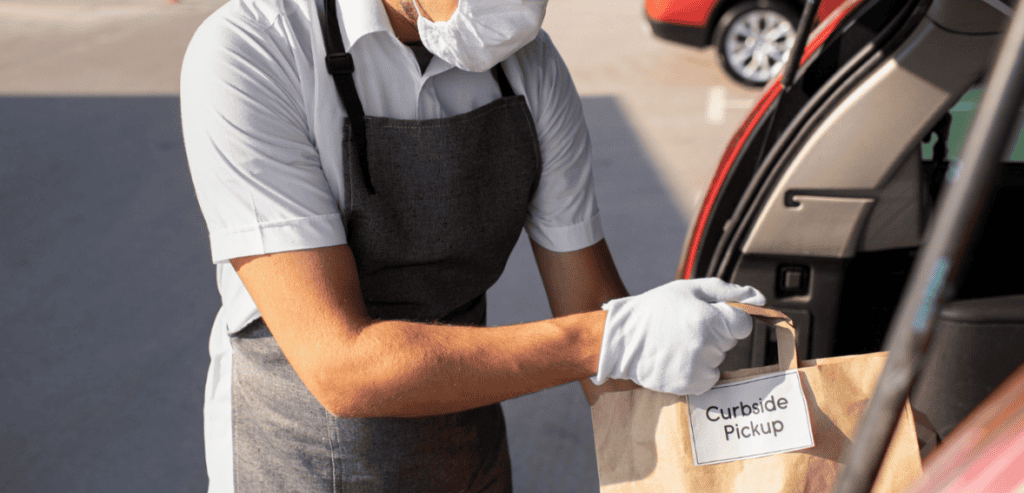
Although curbside pickup offers many advantages, it also creates operational challenges for retailers. Managing large volumes of pickup orders requires strong coordination between inventory systems, staff schedules, customer communication, and store logistics. One common challenge involves inventory accuracy. If products appear available online but are actually out of stock, customer frustration can increase quickly. Retailers must maintain highly accurate inventory tracking to avoid cancellations and service failures.
Parking lot congestion can also become problematic during peak shopping periods. Stores with limited parking spaces may struggle to accommodate large numbers of curbside customers while still supporting regular shoppers visiting the store physically.
Staffing pressures are another concern. Preparing pickup orders, managing customer arrivals, and handling in-store operations simultaneously can place additional demands on employees. Retailers must balance staffing levels carefully to maintain service quality across all shopping channels. Speed expectations continue rising as well. Customers now expect pickup experiences to happen quickly and smoothly. Delays, confusion, or poor communication can damage customer satisfaction and reduce repeat usage.
Retailers also face technology investment costs. Supporting the hybrid shopping experience often requires upgraded software systems, mobile app development, inventory integration tools, and digital infrastructure improvements that can be expensive for smaller businesses.
How Small Businesses Are Adapting
Large national retailers were among the first to scale curbside pickup operations widely, but many smaller businesses have also adopted these services successfully. Local stores increasingly recognize that customers now expect flexible shopping options regardless of business size. Independent retailers often use simpler approaches compared to major chains. Social media ordering, text-based communication, phone orders, and basic online checkout systems have allowed many smaller businesses to offer online order pickup without massive technology investments.
Small businesses can sometimes provide more personalized pickup experiences as well. Customers often appreciate direct communication, flexible service, and local convenience offered by neighborhood retailers. For many independent businesses, curbside pickup also became a survival strategy during periods when traditional foot traffic declined. Retail pickup services allowed smaller stores to continue serving loyal customers while adapting to changing shopping behaviors.
Local retailers that successfully combine personal customer service with digital convenience often build strong community relationships. Customers increasingly value businesses that offer both flexibility and familiarity in their shopping experiences.
The Long-Term Impact on Retail Strategy
Curbside pickup is no longer viewed as a temporary retail adjustment. Instead, it has become a permanent part of long-term retail strategy for many businesses. Consumers have integrated pickup services into their shopping routines, and retailers recognize that flexibility will remain essential moving forward.
Many companies are redesigning stores with pickup functionality in mind from the beginning. Future retail spaces may include larger staging areas, dedicated pickup lanes, automated lockers, and integrated digital fulfillment systems designed specifically for blended shopping models. Retailers are also investing more heavily in omnichannel strategies that connect online and offline operations seamlessly. The goal is to create consistent experiences regardless of how customers choose to shop.
Competition within retail continues shifting toward convenience, speed, and flexibility rather than simply product selection alone. Businesses offering efficient hybrid shopping experience models may gain stronger long-term customer loyalty compared to retailers relying only on traditional store formats.
Customer expectations will likely continue evolving as technology improves further. Faster pickup times, better app experiences, real-time tracking, and personalized services may become standard features rather than competitive advantages.
Environmental and Economic Considerations
The growth of curbside pickup also raises interesting environmental and economic questions. Compared to large-scale home delivery networks, consolidated customer pickups may sometimes reduce shipping emissions and packaging waste. Customers collecting multiple items during one trip can create more efficient transportation patterns in some situations.
However, curbside pickup can also increase vehicle traffic around retail locations, especially during busy shopping periods. Retailers and urban planners may need to consider parking design, traffic flow, and sustainability strategies as pickup services continue expanding. Economically, curbside services can help retailers compete more effectively with large e-commerce platforms. Physical stores gain advantages by combining local inventory access with digital convenience, something pure online retailers cannot always replicate easily.
Retailers may also save on shipping expenses because customers handle the final stage of product transportation themselves. At the same time, businesses must manage additional labor and technology costs associated with operating pickup systems effectively. The overall economic impact will likely continue evolving as retailers refine operations and consumers further integrate pickup services into everyday shopping habits.
Conclusion
The rise of curbside pickup represents one of the most significant shifts in modern retail behavior. What began as a convenience-driven adaptation quickly became a permanent part of how consumers shop across industries. Customers increasingly value speed, flexibility, convenience, and control, and retail pickup services successfully address many of those expectations.
The growth of curbside pickup trends has transformed both customer behavior and retail operations. Businesses now operate within a hybrid shopping experience where online browsing, digital ordering, and physical store fulfillment work together seamlessly. Retailers are no longer simply selling products inside stores. They are managing connected shopping ecosystems that blend digital convenience with local accessibility.
Click and collect retail models have also changed the role of physical stores themselves. Locations now function as fulfillment centers, customer service hubs, and pickup destinations supporting multiple shopping channels simultaneously.
While challenges remain involving staffing, inventory management, technology investment, and operational coordination, the long-term direction of retail is becoming increasingly clear. Customers expect flexible shopping experiences that fit into their lifestyles, and businesses that adapt successfully will likely remain more competitive in the future.
As online order pickup continues growing, retailers that invest in convenience, technology, communication, and operational efficiency will be better positioned to meet evolving customer expectations. Curbside pickup is no longer simply an additional service. It has become a core part of modern retail strategy and a defining feature of the future shopping experience.